
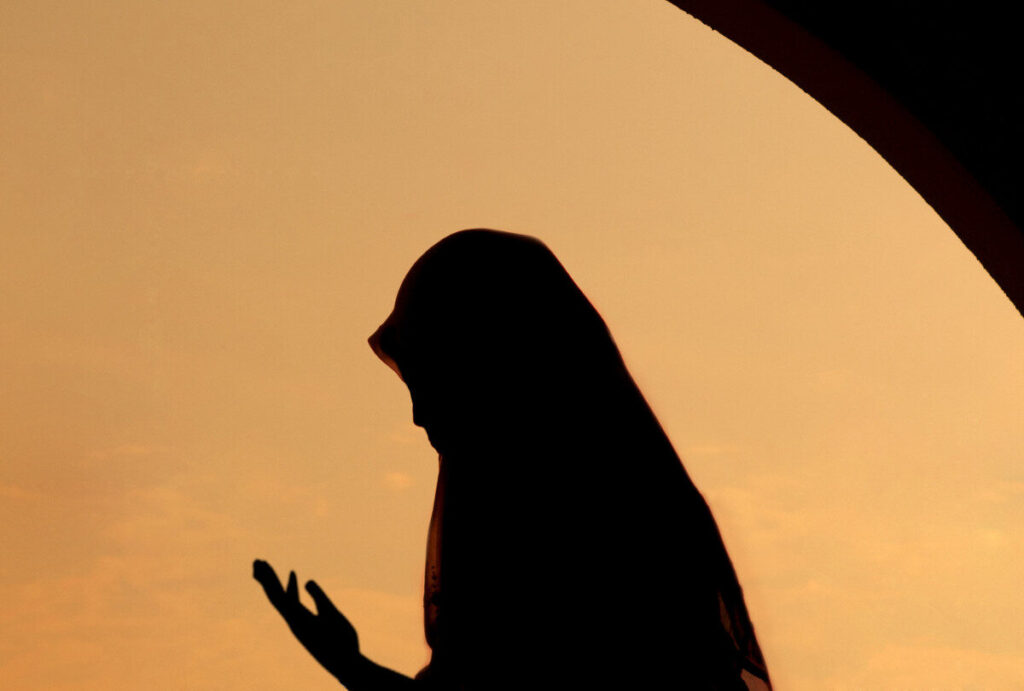
Islam began quietly, with revelation descending upon Prophet Muhammad (saww) in a cave on Mount Hira.
But while revelation ignited the message, it was sustained, protected, and made possible by the unwavering belief and sacrifice of one woman: Sayyida Khadija (sa).
Before Islam had followers, institutions, or political power, it had a believer.
A woman who recognised the truth before the world did, and who placed her entire life, wealth, and security in the hands of Allah (swt).
The Prophet (saww) later reflected on this unique bond when he said:
“Allah (swt) did not grant me better than her; she accepted me when people rejected me; she shared her wealth with me when other people deprived me; and Allah (swt) has provided children for me from her, while He didn’t provide children for me from other than her.”
Al-Ifsah, p.217
The rise of Islam cannot be separated from Lady Khadija (sa).
Her role was not secondary or symbolic. It was foundational.
A World Hostile to Truth
When the Prophet (saww) declared the message of Islam, the response from Quraysh was swift and brutal.
Early Muslims were mocked, beaten, socially isolated, and economically strangled. Faith came at a cost.
Converts lost their livelihoods. Families were torn apart.
Trade boycotts were imposed to force Muslims into silence and submission.
One of the harshest periods was the boycott of Banu Hashim, when the Prophet (saww), Sayyida Khadija (sa), and the believers were cut off from society.
They show us how to remain upright when the world feels unsteady, and how to act with faith when justice feels delayed.
During this time, survival itself became an act of worship.
Reflecting on those early days, the Prophet (saww) said:
“Who is like Khadija (sa)? She believed in me (as the messenger of God) when people rejected me, and she supported me (in establishing) the religion of God by contributing her wealth.”
Bihar al-Anwar, v.43
Without protection, stability, and resources, the message of Islam could have been crushed in its infancy.
She Gave so Islam Could Live
Lady Khadija (sa) was one of the most respected and successful businesswomen in Makkah.
Her wealth was vast, secure, and earned with integrity.
Yet when Islam came, she did not hesitate. She placed everything she had at the service of Allah (swt).
Her wealth fed the hungry during the boycott.
It protected the Prophet (saww) from financial pressure.
It allowed Islam to breathe when every worldly force was trying to suffocate it.
The Quran alludes to this divine support when Allah (swt) addresses the Prophet (saww):
“Did not He find you in need and made you free from need (through Khadija)?”
Surah Ad-Duha, Verse 8
Her giving was not charity in the casual sense. It was total devotion.
Wealth as a Trust from Allah (swt)
Islam does not condemn wealth. It condemns arrogance, hoarding, and neglect of responsibility.
Lady Khadija (sa) understood that wealth is a trust, a trust from Allah (swt).
The Quran states:
“You shall never attain (the perfect standard of) righteousness until you spend (in charity) from (the wealth) that you love; and whatever you spend, Allah (swt) surely knows it.”
Surah Ale Imran, Verse 92
Lady Khadija (sa) spent from what she loved most.
Her businesses, her security, her comfort.
And through that sacrifice, she attained nearness to Allah (swt).
Her status is affirmed by the Prophet (saww), who said:
“The four best women in Paradise are the following. Maryam (sa), the daughter of Imran. Khadija (sa), the daughter of Khuwaylid; Fatima (sa), the daughter of Muhammad (saww); and Asiya, the daughter of Muzahim and the wife of Firaun.”
Al-Khisal, v.1
Her wealth earned her more than worldly success.
It earned her eternal honour.
What Her Sacrifice Asks of Us Today
Lady Khadija (sa) did not wait for ease to give.
She gave when it was hardest, when the future was uncertain, and when sacrifice was demanded.
Today, faith still needs protectors.
The global community continues to face poverty, displacement, and hardship.
Belief still requires action.
Her legacy invites reflection: what are we willing to place in the hands of Allah (swt)?
From Khadija (sa) to the Global Community Today
When wealth is guided by faith, communities are uplifted.
Children are protected. Knowledge is preserved. Dignity is restored.
This spirit lives on through The Zahra Trust Movement.
Just as Lady Khadija’s (sa) wealth safeguarded Islam, today’s supporters safeguard lives, dignity, and faith through ethical, faith-led giving.
Supporting the vulnerable is not separate from worship. It is worship.
Honouring Her Legacy Through Action
Lady Khadija (sa) gave so Islam could live.
Her sacrifice ensured that the light of truth was not extinguished in its earliest days.
That responsibility now rests with us.
Through The Zahra Trust Movement, your support becomes food for the hungry, shelter for the displaced, care for the orphaned, and hope for those who have been forgotten.
Your giving protects life, preserves dignity, and strengthens faith across the global community.
Do not let her legacy end with remembrance alone.
Give with intention. Give with courage.
Give for the sake of Allah (swt).
FAQ
Her wealth protected Islam during its most fragile years, particularly during persecution and boycott, allowing the message of Allah (swt) to continue.
Yes, her giving was an act of ibadah rooted in faith, love, and complete trust in Allah (swt).
Yes. Multiple narrations record the Prophet (saww) openly praising her belief, loyalty, and financial sacrifice.
She teaches that wealth should be used to protect the vulnerable, strengthen faith, and uplift the global community.
No. Islam teaches that wealth is a trust from Allah (swt) and must be used responsibly in His path.
By using resources to serve Allah (swt), protect dignity, and support meaningful causes.
More from blog
Bridging the Digital Divide Through Education
Discover how education and technology can help bridge the digital divide and create equal learning opportunities. Support children with the tools for…
Can Sadaqah Be More Than Money?
Sadaqah isn't only about giving money. Discover how your time, kindness, knowledge and actions can become acts of charity in Islam with…
The Future Starts with Education
Invest in education and help vulnerable children build skills, confidence and opportunity. Support The Zahra Trust’s Back to School appeal today.