
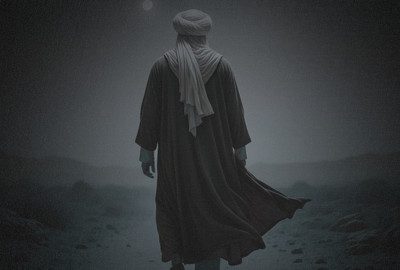
The tragedy of Karbala did not conclude with the martyrdom of Imam Hussain (as) on the 10th of Muharram.
As the dust settled on the battlefield, one final, sacred duty remained: the burial of the martyrs.
On the 13th of Muharram, a profound and miraculous event occurred. Imam Zain Al-Abideen (as), though a prisoner in Kufa, appeared in Karbala to bury his beloved father and the fallen companions.
Let’s explore this divine miracle.
After Ashura: The Bodies Remain Unburied
In the aftermath of the massacre at Karbala, the bodies of Imam Hussain (as), his family members, and his loyal companions were left unburied for three days. Umar ibn Saad (la), a commander in Yazid’s (la) army, departed the battlefield, leaving the martyrs’ bodies under the scorching sun of Naynawah.
When the soldiers had departed, the Banu Asad tribe approached the plains to bury the dead.
One among them described what he witnessed, “Once the army had left, I came to the battlefield and saw light emanating from those corpses that were covered with blood yet smelled sweet scents.”
The Banu Asad were unable to identify the disfigured and decapitated bodies scattered across the plain. The scene was heartbreaking and overwhelming.
The Miracle of Imam Zain Al-Abideen (as)
Following the martyrdom of Aba Abdillah (as), the Imamate passed to his son, Imam Zain Al-Abideen (as), who was imprisoned in Kufa at the time.
Yet on the 13th of Muharram, he miraculously arrived in Karbala to perform the burial rites.
Despite his physical captivity, Allah (swt) granted the Imam (as) the ability to appear at the sacred site. This miracle demonstrated the divine authority and position granted to the Imams (as).
Allah (swt) reminds us in Surah al-Baqarah, “Allah (swt) grants His kingdom to whomever he pleases.” (2:247)
According to Imam Al-Ridha (as), Imam Sajjad (as) left the prison unseen, carried out the burials, and returned without detection. (Nafasul Mahmum)
The Burial of the Martyrs of Karbala
When Imam Zain Al-Abideen (as) arrived in Karbala, the Banu Asad were confused by his presence. The Imam (as) informed them that the burial of the martyrs was his divine responsibility.
He began by identifying the martyrs to the Banu Asad, distinguishing members of the Banu Hashim from among the fallen.
Upon reaching his father’s body, Imam Sajjad (as) embraced him, weeping with profound sorrow.
He placed his hand beneath his father’s back and said, “In the Name of Allah, and according to the creed of the Messenger of Allah (swt). Allah (swt) has said the truth, and so has His Messenger (saww). The will of Allah (swt) be done; there is no power nor might except in Allah, the Great.”
He then said, “Congratulations to the land that contains your pure body, for the world after you is dark, whereas the hereafter in your light shall shine.”
Next, Imam Sajjad (as) turned to his uncle Hazrat Abbas (as), the standard-bearer of Karbala. Seeing his body, he wept and said, “May the world after you be obliterated, O moon of Banu Hashim, and peace from me to you, O martyr, and the mercy of Allah (As) and His blessings.”
The Imam (as) would bury the rest of the martyrs of Karbala as well:
- Ali al-Akbar (as) was buried at the feet of Imam Hussain (as)
- Ali al-Asghar (as) was laid to rest with his father
- Habib ibn Madhahir was buried near the grave of Aba Abdillah (as)
- Hurr ibn Riyahi was taken and buried by his own tribe
- The remaining companions and family members were buried in a collective grave
By the grace and will of Allah (swt), the martyrs of Karbala were finally honoured with a dignified burial.
Conclusion
As we reflect on the events of Ashura, we must not overlook the divine miracle that followed. The 13th of Muharram is a testimony to sacred duty, divine intervention, and spiritual continuity.
Let us honour the memory of the martyrs not only through remembrance but also through action: by supporting the oppressed, helping orphans, and continuing the legacy of compassion taught by the Ahlulbayt (as).
Donate today in honour of the 13th of Muharram. Let their legacy live on through us.
FAQs
The bodies of Imam Hussain (as), his family, and companions lay unburied for three days, from the 10th to the 13th of Muharram. During this period, only the soldiers of Ibn Saad’s (la) army were buried. The martyrs were left exposed to the sun, unshrouded and dishonoured.
The burials took place on the 13th of Muharram. Imam Zain al-Abideen (as) — despite being imprisoned — miraculously came to Karbala to carry out the burials, assisted by the Banu Asad, who helped him dig the graves.
The Banu Asad lived near the site of the battle. Years earlier, Imam Hussain (as) had purchased the land of Karbala and entrusted them with his burial should he fall there. Their moral and spiritual sense of duty compelled them to act.
Due to the severe mutilation and beheading of many martyrs, their identities were difficult to confirm. The Banu Asad could not distinguish between them.
Only someone who knew them intimately — Imam Zain Al-Abideen (as) — could guide the burial.
In Shia theology, only an Imam may perform the final rites for another Imam. By divine will, Imam Zain al-Abideen (as) was granted the ability to leave prison and fulfil this sacred obligation.
His appearance affirmed his divine authority and safeguarded the dignity of his father’s burial.
More from blog

Bridging the Digital Divide Through Education
Discover how education and technology can help bridge the digital divide and create equal learning opportunities. Support children with the tools for…
Can Sadaqah Be More Than Money?
Sadaqah isn't only about giving money. Discover how your time, kindness, knowledge and actions can become acts of charity in Islam with…

The Future Starts with Education
Invest in education and help vulnerable children build skills, confidence and opportunity. Support The Zahra Trust’s Back to School appeal today.