
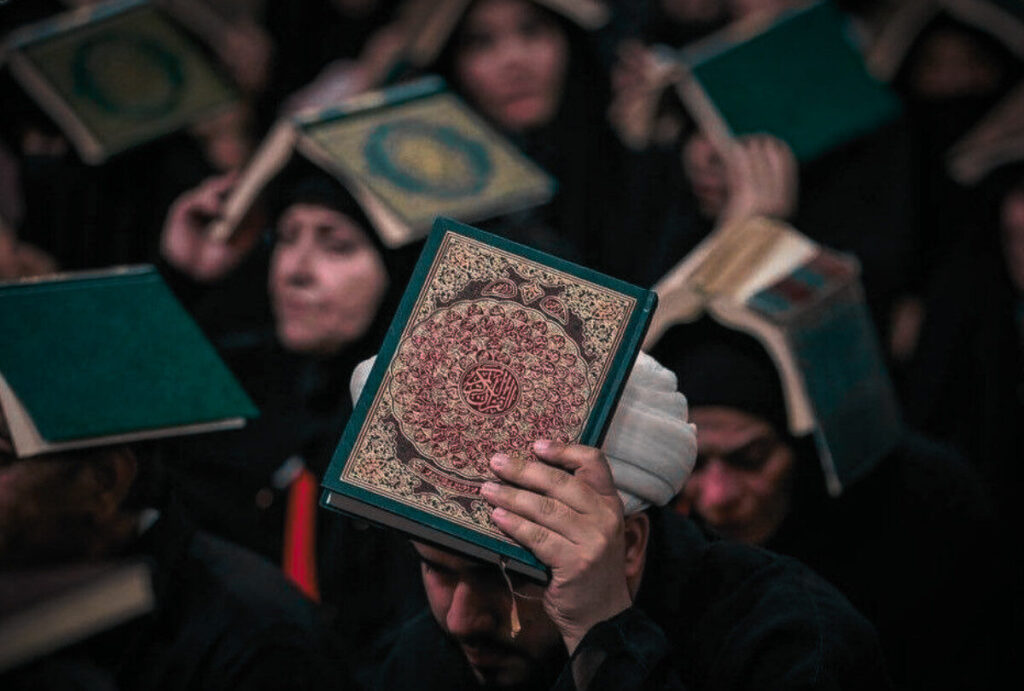
In the stillness of Laylatul Qadr, believers across the world can be seen holding the Quran above their heads, whispering heartfelt prayers into the silence of the night.
It is a deeply emotional image, one that raises an important question.
What does this act truly mean, and why has it become such a recognised part of Laylatul Qadr practices?
This is not a gesture of symbolism for its own sake.
Raising the Quran on the head is an amaal, an intentional act of worship, accompanied by a specific dua.
When performed with understanding, it becomes a moment of humility, need, and closeness to Allah (swt).
Learning the meaning behind this act allows Laylatul Qadr worship to move beyond routine and into conscious, heartfelt devotion.
When sacred actions become routine
Many acts of worship are inherited through practice.
Over time, actions can be repeated without reflection, even on nights as sacred as Laylatul Qadr.
When this happens, powerful moments risk becoming habitual rather than transformative.
Laylatul Qadr is described as a night of destiny, mercy, and forgiveness.
The Quran reminds us of its centrality in this month:
“The month of Ramadan in which the Quran was revealed (to the heart of the Prophet saw), as a guidance for people, clear indications of the right path, and (a measure of) distinction (between truth and falsity).”
Surah Baqarah, Verse 185
Understanding why we perform each amaal helps restore depth to worship and allows every action to become a sincere conversation with Allah (swt).
The historical roots of placing the Quran on the head
The practice of placing the Quran on the head during Laylatul Qadr is found within the Qadr night rituals and is rooted in dua and reverence rather than cultural expression.
Classical narrations describe believers seeking nearness to Allah (swt) through His Book and through those who carried and lived its message.
Historically, this amaal is performed while reciting a supplication that calls upon Allah (swt) by the Quran, by His Names, and by the Ahlulbayt (as).
The physical act reflects an inner posture of submission.
It is the servant placing divine guidance above personal desire, ego, and self-reliance.
Importantly, the Quran is not worshipped.
It is honoured as the means through which Allah (swt) speaks to humanity.
Placing the words of Allah (swt) above ourselves
Holding the Quran above the head is a physical expression of an inward truth.
It acknowledges that guidance comes from Allah (swt), not from the self.
By raising the Quran, the believer silently affirms that divine instruction stands above intellect, status, and worldly concerns.
This meaning is reinforced by the words of the Prophet (saw):
“When matters become obscure for you like the darkness of the night, then turn to the Quran, for it is the mediating intercessor and the trustworthy deviser. Whoever puts it in front of them, it will lead them to Heaven, and whoever puts it behind them, it will drag them to Hell.”
Kanz al-Ummal, n.4027
The act becomes a moment of moral alignment, where the believer recommits to placing the Quran at the centre of their life.
Laylatul Qadr as the night of revelation and destiny
Laylatul Qadr is not simply a blessed night. It is the night on which revelation itself is honoured.
Prophet Muhammad (saw) is reported to have said:
“O people, this month that is coming upon you is the chief of all months. One particular night in it is better than a thousand months.”
Amali al-Saduq, p.56
Imam al-Sadiq (as) further explains the continuity of divine revelation:
“Torah was revealed during the sixth night of the month of Ramadan. Injil was revealed during the twelfth night of the month of Ramadan. Al-Zabbur was revealed during the eighteenth night of the month of Ramadan, and the Holy Quran was revealed during the night of destiny.”
Al-Kafi, v.4
Placing the Quran on the head during this night becomes an act of standing beneath the weight of revelation, seeking mercy and forgiveness through the very words that shape destiny.
The Quran as a guide and leader
The Quran does not merely inform belief. It actively guides conduct, ethics, and decision-making.
The Prophet (saw) is reported to have said:
“You must adhere to the Quran, so take it as an Imam and a leader.”
Kanz al-Ummal, n.4029
By raising the Quran during Laylatul Qadr, believers reaffirm their willingness to be led by divine guidance in the year ahead.
It is a renewal of commitment, not only for the night, but for life beyond it.
The amaal and its dua
This practice is not complete without its supplication.
While holding the Quran on the head, a dua is recited that calls upon Allah (swt) through His Book and the Ahlulbayt (as).
The dua expresses repentance, hope, and reliance.
Entering Laylatul Qadr with knowledge and intention
Laylatul Qadr invites believers to pause, reflect, and realign.
Raising the Quran on the head is not about form alone.
It is about placing divine guidance above the self and stepping into the night with humility, hope, and awareness.
One of the most beautiful ways to begin this sacred night is by softening the heart through generosity.
Offering sadaqah before entering into worship clears the path for mercy, lifts the weight of the soul, and opens the night with an act beloved to Allah (swt).
It is a quiet declaration that we come not only asking, but also giving.
Approached with understanding and intention, the amaal of Laylatul Qadr become moments of true connection, shaping not only the night itself but the direction of our lives long after it ends.
FAQ
No. This amaal is recommended, not obligatory. It is a voluntary act of devotion meant to deepen reflection and sincerity during Laylatul Qadr.
The act is preserved within Shia devotional traditions due to its strong emphasis on dua, reverence for revelation, and connection to the Ahlulbayt (as).
No. The Quran is honoured as divine guidance, not worshipped. All worship remains directed to Allah (swt) alone.
Yes. Laylatul Qadr worship, including this practice, can be performed individually or collectively, at home or in a mosque.
Sincere intention matters most. A believer may follow along or make personal supplications while holding the Quran with reverence.
It encourages believers to keep the Quran central in daily decisions, ethics, and spiritual growth throughout the year.
More from blog
Bridging the Digital Divide Through Education
Discover how education and technology can help bridge the digital divide and create equal learning opportunities. Support children with the tools for…
Can Sadaqah Be More Than Money?
Sadaqah isn't only about giving money. Discover how your time, kindness, knowledge and actions can become acts of charity in Islam with…
The Future Starts with Education
Invest in education and help vulnerable children build skills, confidence and opportunity. Support The Zahra Trust’s Back to School appeal today.