
Who was Lady Fatima al-Aleela (sa)? History, tradition and scholarly perspectives
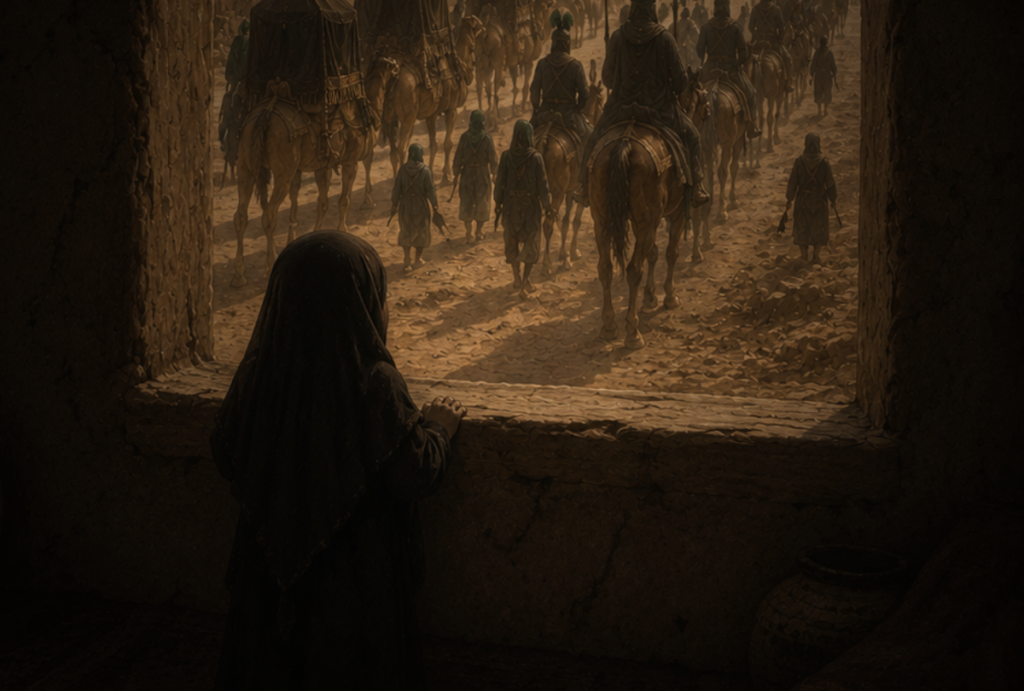
The question of who was Lady Fatima al-Aleela (sa) continues to interest those studying the family of Imam Hussain (as) and the history of Karbala. In many devotional traditions, Lady Fatima al-Aleela (sa) is remembered as a daughter of Imam Hussain (as) who was unable to accompany her father on his journey because of illness. Her story has been passed down through generations and remains part of the wider remembrance of the tragedy of Karbala.
At the same time, historians and scholars have examined the available sources and reached differing conclusions regarding her identity. While many later reports identify her as a daughter of Imam Hussain (as), the earliest historical records do not always provide the same level of detail. Understanding Lady Fatima al-Aleela (sa) therefore requires an appreciation of both devotional tradition and historical scholarship.
What does the title “al-Aleela” mean?
The title “al-Aleela” means “the ill” or “the sick”. Unlike a personal name, it is a descriptive title linked to a particular account concerning the family of Imam Hussain (as).
According to later traditions, Lady Fatima (sa) was unwell at the time Imam Hussain (as) departed from Medina. Because of her condition, she was reportedly unable to join the caravan travelling towards Karbala.
This is significant because many scholars view “al-Aleela” as a description rather than a separate name. As a result, discussions about Lady Fatima al-Aleela (sa) often focus on whether the title refers to an already-known daughter of Imam Hussain (as).
Lady Fatima al-Sughra (sa) and Lady Fatima al-Aleela (sa)
The title “al-Sughra” means “the younger”. Historically, titles such as al-Sughra and al-Kubra were often used to distinguish between individuals who shared the same name within a family.
According to this understanding:
- Lady Fatima al-Sughra (sa) was a daughter of Imam Hussain (as).
- She was reportedly unable to travel due to illness.
- The description “al-Aleela” later became associated with her.
- Both names eventually came to refer to the same individual.
This interpretation appears throughout later devotional literature and remains common in many religious gatherings and educational discussions.
What do the earliest historical sources say?
When historians examine the earliest available sources, they find a more complex picture.
One of the most important early Shia scholars, Shaykh al-Mufid, discusses the family of Imam Hussain (as) in his book “Kitab al-Irshad”. In his account, he mentions daughters named Fatima (sa) and Sakina (sa) but does not clearly identify a separate daughter known specifically as Fatima al-Aleela (sa).
Because “Kitab al-Irshad” was written relatively close to the events of Karbala when compared with many later works, it is frequently referenced in discussions about the historical evidence surrounding Lady Fatima al-Aleela (sa).
For this reason, some historians conclude that the existence of a distinct daughter carrying the title al-Aleela (sa) cannot be firmly established from the earliest sources alone.
The narrative of the daughter left in Medina
The story most commonly associated with Lady Fatima al-Aleela (sa) centres on the belief that she remained in Medina while her father travelled towards Karbala.
According to these reports, illness prevented her from accompanying the family. After the events of Ashura, she is said to have experienced immense grief upon learning of the martyrdom of Imam Hussain (as).
Accounts of this narrative appear more prominently in later historical and devotional works, including reports found in “Maqtal al-Hussain” by al-Kharazmi. These narrations contributed to the preservation and spread of the story throughout the Muslim world.
Over time, the account became a recognised part of devotional literature, particularly in gatherings commemorating Karbala and the sacrifices of the Ahlulbayt (as).
Why do scholars disagree?
The differences of opinion regarding Lady Fatima al-Aleela (sa) are primarily based on historical methodology rather than theology.
Many scholars who accept the tradition view later reports as preserving authentic memories passed down through generations. They argue that devotional communities often maintained historical details that were not always recorded in early written works.
Other historians focus on source chronology and documentary evidence. They note that references to Lady Fatima al-Aleela (sa) become more prominent in later literature and are less explicit in earlier records.
Several factors contribute to the ongoing discussion:
- Limited references in the earliest sources.
- Differences between historical accounts.
- Questions regarding chains of transmission.
- The appearance of more detailed narratives in later literature.
As a result, scholarly opinions range from full acceptance of the traditional account to a more cautious historical assessment.
Loyalty through the example of the Ahlulbayt (as)
The discussion surrounding Lady Fatima al-Aleela (sa) also highlights an important characteristic of the intellectual legacy of the Ahlulbayt (as): a commitment to preserving knowledge with sincerity and care.
Throughout Islamic history, scholars associated with the teachings of the Ahlulbayt (as) devoted significant effort to collecting narrations, documenting events, and examining historical reports. Their work helped preserve the memory of Karbala while encouraging careful scholarship.
Figures such as Shaykh al-Mufid, al-Sharif al-Murtada, and Shaykh al-Tusi played central roles in developing a scholarly tradition that valued both devotion and accuracy. Their contributions continue to influence how historical questions are approached today.
The debate surrounding Lady Fatima al-Aleela (sa) reflects this legacy. Rather than accepting every report uncritically or dismissing later traditions entirely, scholars have sought to understand the evidence in a balanced and thoughtful manner.
For many believers, this serves as an important reminder that love for the Ahlulbayt (as) includes a commitment to seeking knowledge, preserving history, and engaging with the past responsibly.
What can we say with confidence?
Although some aspects of the discussion remain debated, several points are widely recognised.
Lady Fatima al-Aleela (sa) is commonly understood in later devotional literature to be a daughter of Imam Hussain (as).
Many scholars and narrators identify her with Lady Fatima al-Sughra (sa) rather than treating her as a separate individual.
The title “al-Aleela” is generally understood as a descriptive label meaning “the ill” or “the sick”.
The earliest historical sources do not clearly establish the existence of a separate daughter known specifically by this title.
Taken together, these points help explain why Lady Fatima al-Aleela (sa) remains both a respected figure in devotional tradition and a subject of scholarly discussion.
Final reflections
So, who was Lady Fatima al-Aleela (sa)?
The most widely accepted understanding is that Lady Fatima al-Aleela (sa) was a daughter of Imam Hussain (as) who is often identified with Lady Fatima al-Sughra (sa). The title “al-Aleela” reflects reports that she was ill and therefore unable to accompany her father on the journey that culminated in Karbala.
While later devotional literature preserves and celebrates this narrative, historians continue to examine the available evidence and discuss the extent to which the account can be verified through early sources.
Regardless of the scholarly debate, the story of Lady Fatima al-Aleela (sa) remains connected to the enduring legacy of Karbala and the remembrance of the sacrifices made by the family of Imam Hussain (as).
Let your remembrance continue long after Muharram ends. Support widows and orphans, reflecting the hardship faced by the family and companions of Aba Abdillah (as) after Karbala. Build a legacy that lives on beyond the season of remembrance.
Frequently asked questions
Many later Shia sources describe Lady Fatima al-Aleela (sa) as a daughter of Imam Hussain (as). However, historians continue to discuss how clearly this identity can be established from the earliest available records.
In many devotional traditions, yes. Lady Fatima al-Aleela (sa) is often identified with Lady Fatima al-Sughra (sa), with “al-Aleela” functioning as a descriptive title rather than a separate name.
According to later narrations, she remained in Medina because illness prevented her from accompanying Imam Hussain (as) and the rest of the family.
The main reason is the difference between early and later sources. While later literature provides more detailed accounts, earlier historical works offer less explicit information.
Early works such as Shaykh al-Mufid’s “Kitab al-Irshad” mention daughters of Imam Hussain (as), but they do not clearly identify a separate daughter specifically known as Lady Fatima al-Aleela (sa).
More from blog

Bridging the Digital Divide Through Education
Discover how education and technology can help bridge the digital divide and create equal learning opportunities. Support children with the tools for…
Can Sadaqah Be More Than Money?
Sadaqah isn't only about giving money. Discover how your time, kindness, knowledge and actions can become acts of charity in Islam with…

The Future Starts with Education
Invest in education and help vulnerable children build skills, confidence and opportunity. Support The Zahra Trust’s Back to School appeal today.