
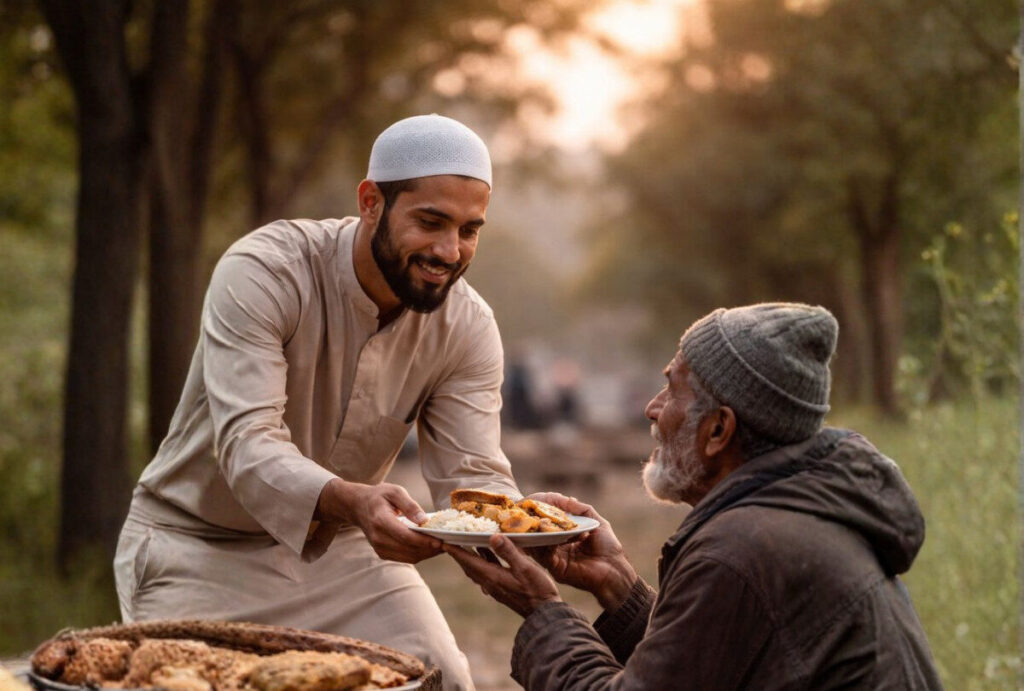
What if the greatest form of worship wasn’t only found in prayer – but in people?
As Muslims, we cherish our love for the Ahlulbayt (as). We attend majalis, we commemorate their sacrifices, and we speak of their virtues. Yet one of their most powerful teachings is simple and practical: serve humanity.
Allah (swt) says in the Holy Qur’an:
“And they give food, despite their love for it, to the needy, the orphan, and the captive.”
Surah Al-Insaan, Ayah 8
This verse was revealed about the household of Imam Ali (as) and Lady Fatima (sa). Even when they themselves were in need, they chose to feed others.
Service was not secondary in their lives. It was central.
For us at The Zahra Trust, this verse is more than history. It is a blueprint.
Service was their identity
Imam Ali (as) would walk the streets at night ensuring no family slept hungry. Imam Hasan (as) was known for giving away his wealth repeatedly. Imam Husayn (as) stood in Karbala not for power, but to protect justice and human dignity.
The Ahlulbayt (as) taught that faith is not passive. It moves. It responds. It uplifts.
To love them means to follow their example – especially in how we treat the vulnerable.
Serving humanity in our communities today
Across the world, families are facing rising living costs. Many are choosing between essentials. Some suffer in silence.
Serving humanity today may not look like carrying sacks of flour at night – but the principle remains the same.
It looks like:
- Supporting widows and single mothers
- Providing food for struggling households
- Funding education and skills development
- Offering dignity through practical support
This is not charity alone. It is living Islam.
When we support initiatives that uplift the vulnerable, we reflect the character of the Ahlulbayt (as). Compassion becomes action.
Why service is worship
Sometimes we separate worship from social responsibility. But the Ahlulbayt (as) never did.
Feeding the hungry is worship. Protecting dignity is worship. Easing hardship is worship.
When we give sincerely for Allah’s (swt) sake, we draw closer to Him.
The Prophet (saww) taught that the best of people are those who benefit others. Service is not an optional extra in our faith – it is its heartbeat.
Ask yourself: Who around me needs support? How can I serve quietly and sincerely? What would the Ahlulbayt (as) do in my position?
Serving humanity does not require grand gestures. It begins with intention and consistency.
Through collective effort, small acts become powerful change.
FAQ
Serving humanity means helping others sincerely for Allah’s (swt) sake, following the example of the Ahlulbayt (as).
They fed the hungry, supported the needy, defended justice, and prioritised compassion even in hardship.
Yes. Acts such as feeding the poor and supporting vulnerable people are forms of worship when done sincerely.
Because the lives of Imam Ali (as), Lady Fatima (sa), and the Imams (as) modelled practical compassion and justice.
By supporting local families, funding community initiatives, volunteering, and giving regularly to trusted causes.
More from blog

Bridging the Digital Divide Through Education
Discover how education and technology can help bridge the digital divide and create equal learning opportunities. Support children with the tools for…
Can Sadaqah Be More Than Money?
Sadaqah isn't only about giving money. Discover how your time, kindness, knowledge and actions can become acts of charity in Islam with…
The Future Starts with Education
Invest in education and help vulnerable children build skills, confidence and opportunity. Support The Zahra Trust’s Back to School appeal today.