
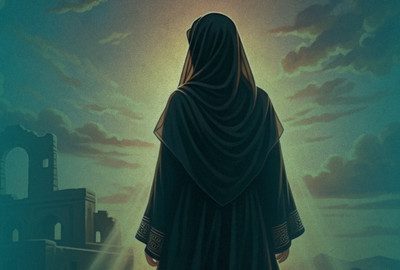
As we commemorate the wafat (death anniversary) of Sayyida Fatima Al-Masuma (sa), we take a moment to reflect on her noble life, her profound spiritual rank, and her enduring impact on Islamic scholarship.
Affectionately known as “Lady Masuma Qom”, she holds a cherished place in the hearts of believers.
We’ll explore key facts about her journey, her virtues, and the legacy she left behind.
Early Life and Family
Sayyida Fatima Al-Masuma (sa) was the daughter of Imam Musa Al-Kadhim (as), the seventh Shia Imam, and Lady Najmah Khatun (also named Lady Taktam). Her brother was Imam Ali Al-Ridha (as), the eighth Shia Imam.
Read more about Imam Al-Ridha (as) here.
She was born in Medina. Although there is a difference of opinion about her exact date of birth, many traditions mention the 1st of Dhul Qaʿdah, 173 AH (Lady Fatima Masuma (as) of Qum). Others suggest slightly different dates.
Growing up in a home filled with spiritual depth and knowledge, Lady Masuma (sa) was nurtured in faith and intellect by her father and, later, her brother.
Even in her early years, she was recognised for her devotion, purity, and understanding.
The Journey to Reunite with Her Brother
In 200 AH, Imam Ali Al-Ridha (as) was summoned by the Abbasid Caliph Ma’mun to Khorasan (Lady Fatima Masuma (as) of Qum).
Longing to see her brother, Lady Masuma (sa) left Medina in 201 AH with a caravan of relatives. Some reports also mention that a letter was sent to the Imam (as), inviting the family to him.
Near Saveh, the group was ambushed by enemies of the Ahlulbayt (as).
Many of her relatives were killed, and she became seriously ill. She asked to be taken to Qom, and her request was granted.
Though her health declined, her presence left a lasting spiritual legacy.
Her Final Days and Burial
Sayyida Masuma (sa) passed away in Qom in 201 AH.
Though the year of her death is unanimously agreed upon, the precise date varies across sources. Some traditions mention the 10th or 12th of Rabi AlThani (Lady Fatima Masuma (as) of Qum), and some commemorate her passing on the 4th of Rabi AlAwwal (Shia Devotions).
After falling ill on the way, she arrived in Qom. She passed away there and was buried in Qom, becoming the centre of devotion that would later grow into an important pilgrimage site.
She was buried in a garden owned by Musa ibn Khazraj, who was a companion of the 8th Imam (as) (Lady Fatima Masuma (as) of Qum).
Her Shrine and Lasting Legacy
Following her death, Sayyida Fatima Al-Masuma (sa) was laid to rest in Qom. Her shrine has since become one of the holiest sites of pilgrimage for Shia Muslims.
Many travel from near and far to perform her ziyarah, seeking spiritual nearness and blessings.
Imam Al-Jawad (as) is reported to have said, “Those who go to the Ziyarah of my aunt in Qom will be rewarded with Paradise.” (Kamil al-Ziyarat, ch.106, h.2)
Qom has flourished as a centre of Shia scholarship, with seminaries that continue to educate religious scholars from around the world — a legacy rooted in the spiritual presence of Lady Masuma (sa).
As one of the noble servants and friends of Allah (swt), her life reflects the Quranic promise verse where Allah (swt) says, “(As for) the friends of Allah (swt), there will be no fear for them nor shall they grieve (both in this world and in the hereafter).” (10:62)
Conclusion
Sayyida Fatima Al-Masuma (sa) lived a life rooted in knowledge, devotion, and love for the Ahlulbayt (as).
Though her time in this world was brief, her impact endures through the shrine visited by millions, the seminary city that blossomed around her, and the hearts she continues to inspire.
Let remembrance become action.
FAQ
Sayyida Fatima Al-Masuma (sa) was the daughter of the seventh Imam, Musa Al-Kadhim (as), and the sister of the eighth Imam, Ali Al-Ridha (as). She is revered for her piety, knowledge, and devotion, and her shrine in Qom is a major centre of spiritual and scholarly significance for Shia Muslims.
She set out from Medina to reunite with her brother, Imam Ali Al-Ridha (as), after he was summoned to Khorasan by the Abbasid Caliph. Along the way, her caravan was attacked, leading to her illness and eventual arrival in Qom.
Her shrine is not only a place of pilgrimage (ziyarah), but it also became a spiritual and academic hub. Qom is now home to one of the most prominent Islamic seminaries, attracting scholars and students from around the world.
According to a hadith from Imam al-Jawad (as), “Those who go to the Ziyarah of my aunt in Qom will be rewarded with Paradise.” (Kamil al-Ziyarat, ch.106, h.2)
More from blog

Bridging the Digital Divide Through Education
Discover how education and technology can help bridge the digital divide and create equal learning opportunities. Support children with the tools for…
Can Sadaqah Be More Than Money?
Sadaqah isn't only about giving money. Discover how your time, kindness, knowledge and actions can become acts of charity in Islam with…
The Future Starts with Education
Invest in education and help vulnerable children build skills, confidence and opportunity. Support The Zahra Trust’s Back to School appeal today.