
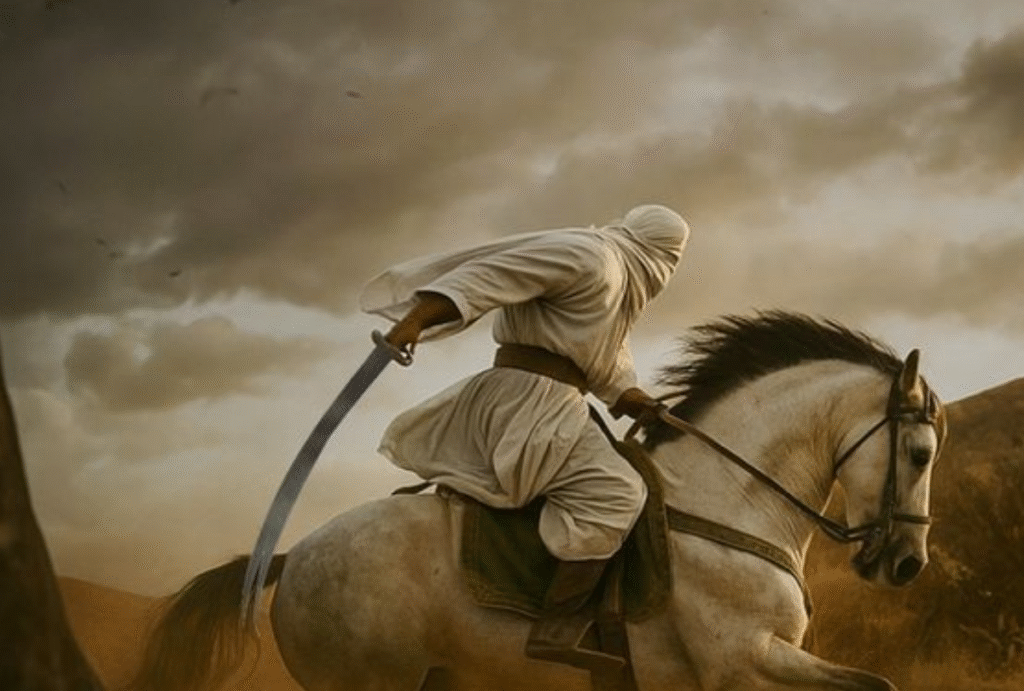
In the earliest and most fragile days of Islam, when the message of Prophet Muhammad (saww) faced intense opposition, one man stood as a fearless protector.
Hamza ibn Abd al-Muttalib (as) was not only the uncle and foster brother of the Prophet (saww), but also one of the strongest defenders of the faith.
His courage, loyalty, and ultimate sacrifice secured him a lasting place in Islamic memory.
He is remembered by his honoured titles, Asadullah (the Lion of Allah) and Sayyid al-Shuhada (the Master of Martyrs), reflecting both his strength in life and his sacrifice in death.
Identity and early life
Hamza ibn Abd al-Muttalib (as) was born in Makkah around 570 AD.
He belonged to the noble Quraysh tribe and shared a unique bond with the Prophet (saww), as both were nursed by the same woman, Thuwaybah.
This made them not only uncle and nephew, but also foster brothers.
Before embracing Islam, Hadhrat Hamza (as) was widely respected for his bravery, physical strength, and skill as a hunter.
He was known for his sense of justice and honour, traits that later aligned naturally with the message of Islam.
Relationship with the Prophet (saww)
Hadhrat Hamza’s (as) relationship with Prophet Muhammad (saww) was deeply rooted in both family ties and mutual respect.
His closeness is highlighted in the following hadith:
“Ali (as) is my best brother, and Hamza and Abbas are my best uncles.”
Uyun Akhbar al-Rida, h.247
This statement reflects the high rank Hadhrat Hamza (as) held in the eyes of the Prophet (saww).
His support was not merely symbolic.
It was active, protective, and deeply sincere, especially during the early years when the Muslim community faced hostility.
Conversion to Islam
Hadhrat Hamza’s (as) acceptance of Islam marked a turning point.
When he learned that Abu Jahl had insulted and harmed the Prophet (saww), he reacted with immediate courage and publicly confronted him.
In that moment, Hadhrat Hamza (as) declared his support for the Prophet (saww) and soon after embraced Islam.
His conversion strengthened the position of Muslims in Makkah.
For the first time, the Quraysh faced a powerful and respected figure willing to defend Islam openly.
Role in defending early Islam
After accepting Islam, Hadhrat Hamza (as) became one of its most steadfast defenders.
He stood beside the Prophet (saww) during critical moments and participated in major battles, including Badr and Uhud.
His presence gave confidence to the early Muslim community.
At a time when they were vulnerable and under pressure, Hadhrat Hamza (as) represented strength, courage, and unwavering faith.
His title of Asadullah (the Lion of Allah) reflects not only his bravery in battle but also his role as a protector of truth and justice.
Martyrdom in the Battle of Uhud
Hamza ibn Abd al-Muttalib (as) was martyred during the Battle of Uhud in 3 AH.
His death was a profound loss, deeply felt by the Prophet (saww) and the Muslim community.
His martyrdom holds a special place in Islamic tradition.
It is in this context that the following verse gains deeper meaning:
“Whoever obeys Allah (swt) and the Messenger (saww), they are with those upon whom Allah (swt) has bestowed favours such as the prophets, the truthful ones, the martyrs and the good doers—they are (surely) good companions,”
Surah An-Nisa, Ayah 69
Hadhrat Hamza’s (as) life and sacrifice place him among those honoured in this verse.
His legacy as Sayyid al-Shuhada (the Master of Martyrs), along with sharing that title with Imam Hussain (as), reflects the greatness of his sacrifice and his elevated status.
Legacy and significance
Hadhrat Hamza’s (as) legacy continues to inspire. He represents:
- Loyalty to the Prophet (saww)
- Courage in the face of oppression
- Sacrifice for truth and justice
His life serves as a reminder that standing for the truth requires both strength and sincerity.
His martyrdom is not only a historical event but a lasting symbol of devotion and faith.
Final reflections on courage and sacrifice
Hamza ibn Abd al-Muttalib (as) stands as one of the most powerful figures in early Islamic history.
His life reflects courage, loyalty, and unwavering belief. His death reflects sacrifice of the highest order.
Through his actions, he became more than a companion or relative.
He became a symbol.
A symbol of strength in defence of truth, and a lasting example for the global community.
Frequently Asked Questions
Hamza ibn Abd al-Muttalib (as) was the uncle and foster brother of Prophet Muhammad (saww) and one of the earliest supporters of Islam.
He is called Asadullah because of his bravery, strength, and fearless defence of Islam in its earliest days.
His martyrdom at Uhud symbolises ultimate sacrifice and loyalty, earning him the title Sayyid al-Shuhada.
He was both the Prophet’s (saww) uncle and foster brother, which made their relationship especially close.
He acted as a protector and defender of the Prophet (saww) and participated in key battles like Badr and Uhud.
He strengthened the early Muslim community and remains a symbol of courage, sacrifice, and faith.
More from blog

Bridging the Digital Divide Through Education
Discover how education and technology can help bridge the digital divide and create equal learning opportunities. Support children with the tools for…

Can Sadaqah Be More Than Money?
Sadaqah isn't only about giving money. Discover how your time, kindness, knowledge and actions can become acts of charity in Islam with…

The Future Starts with Education
Invest in education and help vulnerable children build skills, confidence and opportunity. Support The Zahra Trust’s Back to School appeal today.