
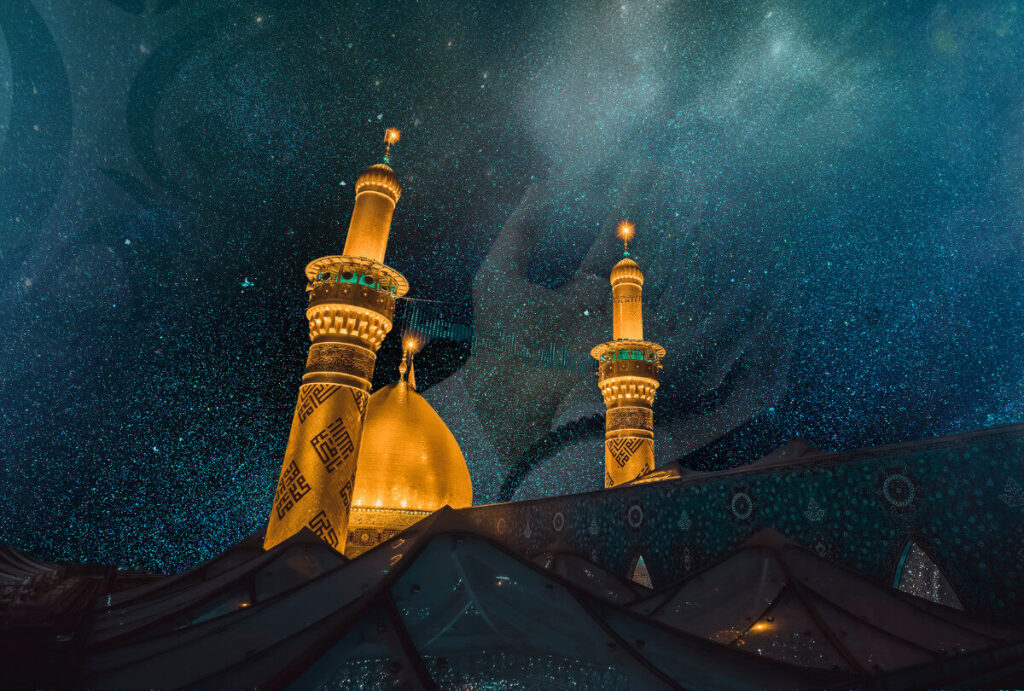
Allah (swt), in His infinite mercy, grants special moments in time when the doors of return are thrown wide open.
Shab-e-Barat, also known as Laylatul Bara’ah, is one of those rare and powerful nights.
Observed on the 15th night of Shaban, it is a moment for reflection, forgiveness, and renewed commitment to faith.
This night reminds believers that no matter how far one may feel, Allah (swt) is always near, waiting for His servants to call upon Him.
A World Carrying Guilt and Longing for Renewal
In today’s world, many quietly carry regret, unanswered prayers, and spiritual distance.
There is a deep longing for a fresh start, yet uncertainty about where to begin.
Shab-e-Barat meets believers exactly where they are, offering hope rather than judgement.
Allah (swt) says in the Quran:
“Your Lord has said, ‘Call Me (for help), and I will answer you’…”
Surah al-Ghafir, Verse 60
Prepare While the Doors of Mercy Are Open
It is a night when sincere supplication is not only welcomed, but promised a response.
Allah (swt) assures His servants:
Your Lord has said, ‘Call Me (for help), and I will answer you’…”
Surah al-Ghafir, Verse 60
What is Shab-e-Barat (Laylatul Bara’ah)?
Shab-e-Barat means “the Night of Freedom”, referring to freedom from sin and punishment through divine forgiveness.
Islamic traditions describe it as a night when Allah (swt) decrees matters for the coming year and showers mercy upon those who turn to Him sincerely.
Imam al-Baqir (as) is reported to have said:
“Surely it (15th of Shaban) is the greatest night after the night of Qadr…so stay awake in supplicating to Allah (swt) and praising Him.”
Bihar al-Anwar, v.94
A Night That Can Change Your Destiny
Shab-e-Barat is also described as a night in which the affairs of the coming year are determined by Allah’s (swt) will, making it a powerful moment for sincere worship.
Imam al-Ridha (as) has reportedly said:
“Ali (as) would not sleep on three nights: the night of the 23rd of the month of Ramadan, the night of Eid al-Fitr, and the night of the middle of Shaban, during which provisions, life spans, and what will occur in the year are distributed.”
Wasail al-Shia, h.10191
The Birth of the Awaited Saviour: A Promise of Justice and Hope
Shab-e-Barat also marks the blessed birth of Imam al-Mahdi (ajtfs), a living symbol of hope, justice, and Allah’s (swt) promise to humanity.
Prophet Muhammad (saww) is narrated to have said:
“Al-Mahdi (ajtfs) is from my progeny; his face is like the brightly illuminated moon.”
Bihar al-Anwar, v.51
Imam al-Ridha (as) described the impact of his reappearance:
“So when he (Imam Al-Mahdi ajtfs) will make his advent, the Earth with radiate with the celestial illumination of its Lord and the scale of justice will be positioned among mankind such that not a single person will oppress another individual.”
Bihar al-Anwar, v.52
Spiritual Benefits of Shab-e-Barat
Among the blessings of this sacred night are forgiveness, answered prayers, and renewed faith.
One of the ways to attain the blessings of this night is through the ziyarat of Imam Hussain (as).
Imam al-Sadiq (as) is reported to have said:
“On the 15th of Shaban, an announcer announces from the highest horizon, ‘O visitors of Imam Hussain (as), return forgiven, and your rewards will be given by Allah, your Lord, and by Muhammad (saww), your Prophet.’”
Kamil al-Ziyarah, ch. 72
Turning Worship into Action Through Compassion
True spiritual renewal inspires action.
Through The Zahra Trust, believers are able to extend the mercy they seek by supporting vulnerable communities with care, dignity, and access to faith.
Shab-e-Barat is a gift of mercy.
FAQ
Shab-e-Barat is a sacred night of mercy, forgiveness, and divine decree, also known as Laylatul Bara’ah.
It offers a powerful opportunity for repentance, answered prayers, and spiritual realignment.
Prayer, seeking forgiveness, reciting the Quran, reflection, and charitable giving.
Islamic teachings emphasize that sincere supplication on this night is answered by Allah (swt).
Because his birth on Shab-e-Barat symbolizes hope, justice, and Allah’s promise to humanity.
By supporting trusted initiatives such as The Zahra Trust, which turn compassion into meaningful action.
More from blog
Bridging the Digital Divide Through Education
Discover how education and technology can help bridge the digital divide and create equal learning opportunities. Support children with the tools for…
Can Sadaqah Be More Than Money?
Sadaqah isn't only about giving money. Discover how your time, kindness, knowledge and actions can become acts of charity in Islam with…
The Future Starts with Education
Invest in education and help vulnerable children build skills, confidence and opportunity. Support The Zahra Trust’s Back to School appeal today.