
Some moments in Islamic history carry lessons that reach far beyond their time.
They reveal the deep love within the household of Prophet Muhammad (saww) and offer lasting reflections on justice, truth, and honouring divine command.
The story of Fadak is one such moment.
Before understanding the significance of this blessed land, it is important to understand the unique station of the one to whom it was gifted.
Prophet Muhammad (saww) is reported to have said:
“Fatima (sa) is a part of me; whoever pleases her, pleases me, and whoever displeases her, displeases me. She is dearer to me than all beings.”
Al-Amali of Shaykh Mufid, a.31, h.2
This powerful narration reflects the extraordinary bond between the Prophet (saww) and his beloved daughter, Sayyida Fatima al-Zahra (sa).
It also helps us understand why the land of Fadak carries such profound meaning in Islamic history.
What was the Land of Fadak?
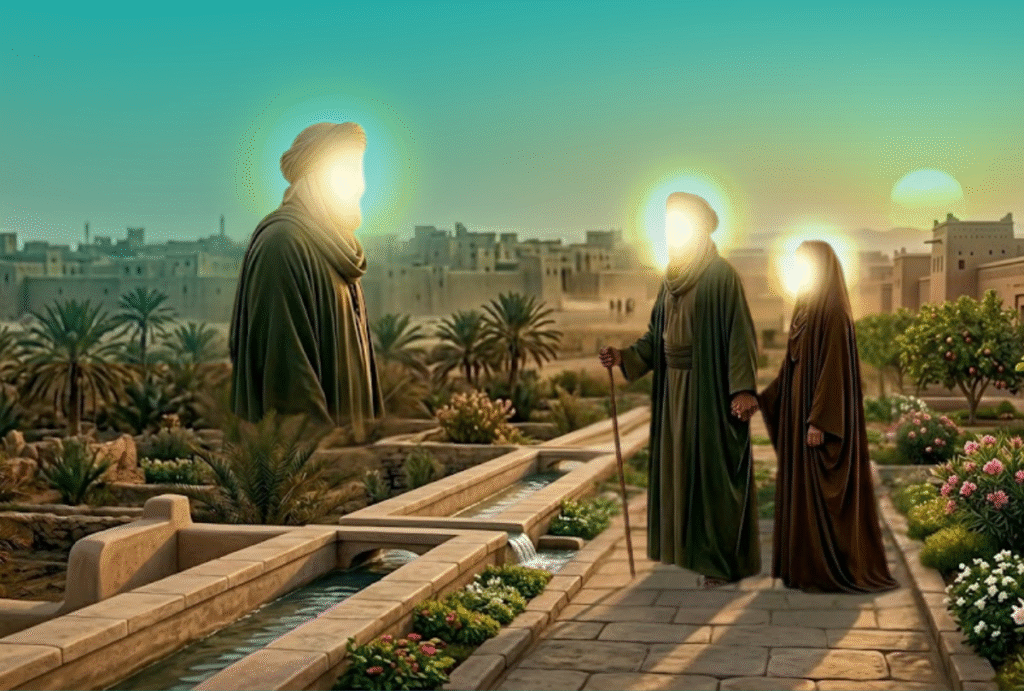
Fadak was a fertile oasis near Khaybar, known for its date palms, flowing springs, and agricultural abundance.
It came under the authority of Prophet Muhammad (saww) peacefully, without battle.
Under Islamic law, this classified it as fay’, meaning it was placed under the direct discretion of the Prophet (saww).
This meant he had the authority to allocate it according to the command of Allah (swt).
Far more than a piece of land, Fadak was a valuable source of ongoing support that could be used to benefit the household of the Prophet (saww) and assist those in need.
Why Did the Prophet (saww) Gift Fadak to Lady Fatima (sa)?
The gifting of Fadak was rooted in divine instruction.
Allah (swt) revealed:
“Give to the relative his dues (from the charity)…”
Surah Al-Isra, Ayah 26
According to narrations, when this verse was revealed, Prophet Muhammad (saww) asked Jibraeel (as) about its meaning.
By the command of Allah (swt), he was instructed to grant Fadak to Lady Fatima (sa).
This was not simply a material gift.
It was an act of obedience to divine revelation and a public affirmation of her honoured station.
The gifting of Fadak also provided Lady Fatima (sa) and her family with financial independence.
It ensured that the resources could be used to uphold dignity, support charitable causes, and continue serving the wider community.
How Sayyida Fatima (sa) Used Fadak
Historical reports indicate that Sayyida Fatima (sa) administered Fadak through appointed representatives.
Its produce was not used for personal luxury.
Instead, its income was directed towards helping the poor, supporting the vulnerable, and assisting those facing hardship.
This reflected the values of Ahlulbayt (as): generosity, service, and complete trust in Allah (swt).
Fadak became a practical example of how blessings should be used as a means of serving others.
What Happened After the Prophet’s (saww) Passing?
After Prophet Muhammad (saww) passed away, Fadak was confiscated by those who usurped the caliphate.
Sayyida Fatima (sa) maintained that the land had been gifted to her during the Prophet’s lifetime and therefore was not an inheritance claim.
Despite presenting her case and offering testimony, her claim was rejected.
This event became one of the most significant moments in early Islamic history, raising serious questions about justice and the rights of Ahlulbayt (as).
What Fadak Represents
For Shia Muslims, Fadak was never merely about land.
It became a symbol of a much deeper issue: the recognition of truth and the rightful status of the family of Prophet Muhammad (saww).
The events surrounding Fadak highlighted the challenges faced by Lady Fatima (sa) after the Prophet’s (saww) passing and reflected broader questions surrounding justice and authority in early Islamic history.
Its significance continues to resonate because it represents the defence of truth even when truth is challenged.
Lessons from the Legacy of Fadak
The story of Fadak invites believers to reflect on justice, integrity, and loyalty to divine guidance.
It reminds us that the rights of Sayyida Fatima (sa) were not ordinary rights.
They were connected to a daughter whom the Prophet (saww) described as part of himself.
Remembering Fadak means remembering the honour bestowed upon Sayyida Fatima (sa), the responsibility to uphold justice, and the timeless example set by Ahlulbayt (as).
Its legacy continues to inspire believers to stand firmly for truth and to uphold dignity in every generation.
Frequently Asked Questions
Fadak was a fertile oasis near Khaybar that came under the authority of Prophet Muhammad (saww) and was later gifted to Sayyida Fatima (sa).
According to narrations, it was gifted by divine instruction following the revelation of Quran 17:26.
No. Shia historical sources maintain that Fadak was gifted during the lifetime of Prophet Muhammad (saww), making it distinct from inheritance.
It remains a powerful symbol of justice, truth, and the recognised rights of Ahlulbayt (as).
The story teaches believers about justice, steadfastness, service to others, and honouring the status of Sayyida Fatima (sa).
More from blog

Bridging the Digital Divide Through Education
Discover how education and technology can help bridge the digital divide and create equal learning opportunities. Support children with the tools for…
Can Sadaqah Be More Than Money?
Sadaqah isn't only about giving money. Discover how your time, kindness, knowledge and actions can become acts of charity in Islam with…
The Future Starts with Education
Invest in education and help vulnerable children build skills, confidence and opportunity. Support The Zahra Trust’s Back to School appeal today.