
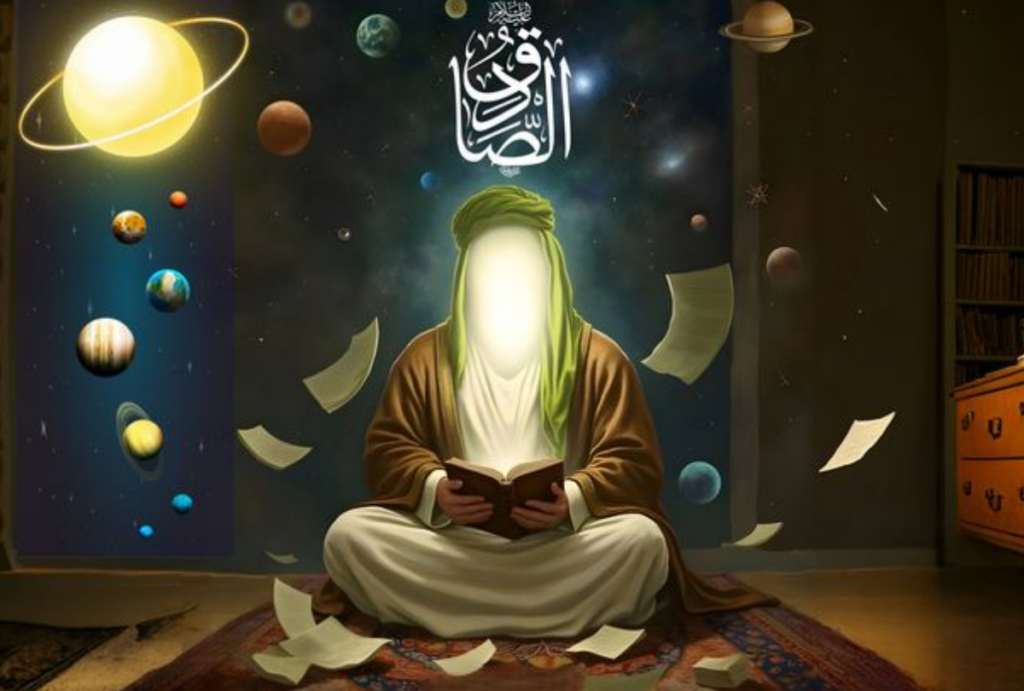
Knowledge has always occupied a central place in Islam. The Quran repeatedly encourages believers to reflect, learn and seek understanding, while Prophet Muhammad (saww) and his family demonstrated through both word and action that knowledge is one of the greatest blessings Allah (swt) bestows upon humanity.
Among the most influential figures in this tradition stands Imam Jafar al-Sadiq (as), the sixth Imam from the Ahlulbayt (as). Living during a period of immense political and intellectual change, he nurtured a generation of scholars whose influence extended far beyond their own lifetimes. His teachings helped preserve authentic Islamic knowledge, shaped the development of jurisprudence and theology, and encouraged thoughtful engagement with the world around us.
His legacy reminds us that education is not simply about acquiring information. It is about drawing closer to Allah (swt), strengthening our character, and using knowledge to benefit society.
As Allah (swt) says in the Holy Quran:
The guardian of divine knowledge
Imam al-Sadiq (as) lived during the transition from Umayyad to Abbasid rule, a time that created greater opportunities for teaching and scholarly discussion. Rather than pursuing political influence, he devoted himself to nurturing knowledge and preserving the teachings of the Prophet (s) and the Ahlulbayt (as).
His study circle in Medina became one of the most significant centres of learning in the Muslim world. Students travelled from different regions and backgrounds to benefit from his knowledge, studying subjects that included Quranic exegesis, hadith, Islamic law, theology and ethics.
His classroom welcomed sincere seekers of knowledge, regardless of their school of thought. This openness helped establish an environment where respectful discussion and intellectual growth could flourish.
Building a legacy of scholarship
The influence of Imam al-Sadiq (as) extended through the remarkable calibre of his students.
Among his most distinguished companions were Zurarah ibn Ayan, regarded as one of the foremost transmitters of the Imam's (as) teachings, alongside Muhammad ibn Muslim, Hisham ibn al-Hakam, and Mumin al-Taq. These devoted students played a vital role in preserving and transmitting the knowledge of the Ahlulbayt (as), laying the foundations for generations of Shia scholarship.
Historical reports also indicate that individuals who later founded major Sunni schools of jurisprudence, including Abu Hanifah and Malik ibn Anas, attended Imam al-Sadiq's (as) lessons and benefited from his knowledge. This reflects the breadth of his influence, which extended well beyond a single school of thought.
Within Twelver Shia Islam, Imam al-Sadiq (as) is recognised as the principal figure behind the development of Jafari jurisprudence. His careful approach to deriving Islamic rulings emphasised the Quran, the authentic teachings of the Prophet (saww) and the guidance of the Imams (as), alongside sound reasoning that remained firmly rooted in revelation.
This balanced methodology allowed future scholars to respond thoughtfully to new questions while remaining faithful to the core principles of Islam.
Knowledge guided by intellect and faith
For Imam al-Sadiq (as), knowledge and intellect were inseparable from faith. Learning was never pursued for status or debate alone. Instead, it was a means of recognising Allah (swt), serving humanity and living according to divine guidance.
He is reported to have said:
"There is no wealth more profiting than the intellect." (al-Ikhtisas, n. 244)
This profound statement reminds us that true success is not measured by material possessions but by the ability to think wisely, make ethical decisions and seek what pleases Allah (swt). An educated mind guided by faith becomes a source of benefit not only for the individual but also for families, communities and future generations.
His emphasis on intellect continues to inspire Muslims to approach learning with sincerity, humility and purpose.
Inspiring inquiry across religious and scientific learning
Imam al-Sadiq's (as) contribution was not limited to religious sciences. Shia historical sources describe him engaging with subjects that today would be recognised as astronomy, medicine, chemistry and the natural sciences.
Among the figures traditionally associated with his circle is Jabir ibn Hayyan, widely regarded as one of the pioneers of early Islamic chemistry. According to Muslim historical tradition, Jabir attributed many foundational ideas within his writings to the teachings of Imam al-Sadiq (as). While historians continue to discuss the extent of this relationship, the tradition reflects the Imam's enduring reputation as a teacher whose intellectual influence reached across multiple fields of learning.
His example demonstrates that Islam encourages curiosity and exploration when they are guided by faith and moral responsibility. Rather than seeing revelation and reason as opposing forces, Imam al-Sadiq (as) showed how they complement one another in the pursuit of truth.
Preserving authentic Islam in a time of change
The Imam (as) lived during an era when new philosophical ideas and intellectual traditions were entering the Muslim world. Rather than rejecting discussion, he equipped his students with the knowledge and confidence to engage critically with emerging ideas while remaining firmly anchored to the Quran and the teachings of the Prophet (saww).
He also worked tirelessly to protect the authentic beliefs of Islam from misunderstandings and exaggerations. His teachings consistently upheld the absolute Oneness of Allah (swt) and clarified the rightful position of the Prophet (saww) and the Ahlulbayt (as) as His devoted servants and chosen guides.
Through this balanced approach, Imam al-Sadiq (as) demonstrated that intellectual confidence comes from a strong foundation in authentic knowledge.
A legacy that continues to inspire
The impact of Imam al-Sadiq (as) did not end with his own students. His teachings continue to shape Islamic scholarship centuries later through hadith collections, legal thought, theology and ethical guidance.
His legacy also offers an important reminder for Muslims today. Every generation has a responsibility to seek knowledge, nurture critical thinking and pass beneficial learning to those who come after them.
He is reported to have said:
This narration highlights the honoured place of intellect within Islam. When guided by revelation, the intellect becomes a means of understanding Allah's (swt) creation, strengthening faith and serving others with wisdom and compassion.
Throughout history, the scholars who followed in Imam al-Sadiq's (as) footsteps demonstrated that the pursuit of knowledge is among the greatest forms of worship and service to humanity.
Following the example of Imam al-Sadiq (as)
Imam al-Sadiq's (as) life teaches us that investing in knowledge is one of the most lasting acts of charity. Every teacher who inspires a student, every child who gains an education and every generation that benefits from sound guidance continues a legacy that stretches back to the Ahlulbayt (as).
This example remains especially relevant today, when millions of vulnerable children face barriers to education because of poverty. Without access to learning, technology and practical skills, many are prevented from reaching the potential Allah (swt) has given them.
Continuing a legacy of knowledge
Imam Jafar al-Sadiq (as) transformed countless lives through knowledge, wisdom and education. His legacy reminds us that nurturing minds is one of the most powerful ways to strengthen individuals, communities and future generations.
Today, many vulnerable children and young people still face barriers that prevent them from accessing the education and opportunities they deserve. They do not only need support for today. They need the knowledge, confidence and practical skills to build tomorrow.
Your support can help provide education, technology and skills training that prepare children and young people for a brighter future. By investing in learning today, you can help unlock potential, create opportunity and empower the next generation to thrive.
Give more than a lesson. Give a future.
Frequently asked questions
Why is Imam Jafar al-Sadiq (as) regarded as one of Islam's greatest scholars?
Imam Jafar al-Sadiq (as) is recognised for preserving and teaching the authentic knowledge of the Prophet (saww) and the Ahlulbayt (as). His contributions to Islamic law, theology, hadith and ethics influenced generations of scholars across different schools of Islamic thought.
What is the Jafari school of thought?
The Jafari school is the school of Islamic jurisprudence associated with the teachings of Imam Jafar al-Sadiq (as). It draws upon the Quran, the sunnah of the Prophet (saww), and the guidance of the Ahlulbayt (as) while emphasising careful reasoning grounded in revelation.
Did Imam al-Sadiq (as) contribute to scientific learning?
Shia historical sources describe Imam al-Sadiq (as) teaching subjects beyond religious sciences, including aspects of astronomy, medicine and natural philosophy. He is also traditionally associated with influencing Jabir ibn Hayyan, although historians differ regarding the precise historical relationship.
Who studied under Imam Jafar al-Sadiq (as)?
Imam Jafar al-Sadiq (as) taught thousands of students. Among his most distinguished companions were Zurarah ibn Ayan, Muhammad ibn Muslim, Hisham ibn al-Hakam, and Mumin al-Taq, who helped preserve and transmit the teachings of the Ahlulbayt (as). Historical reports also indicate that Abu Hanifah and Malik ibn Anas attended the Imam's lessons and benefited from his knowledge.
Why did Imam al-Sadiq (as) place such importance on intellect?
Imam al-Sadiq (as) taught that intellect is among Allah's (swt) greatest gifts and should be used alongside revelation to seek truth, make wise decisions and strengthen faith. His teachings encourage Muslims to pursue knowledge with sincerity and humility.
What can Muslims learn from Imam al-Sadiq's (as) legacy today?
His example reminds Muslims that seeking beneficial knowledge, educating future generations and using learning to serve others are enduring acts of worship. Supporting education today continues the values that Imam al-Sadiq (as) championed throughout his life.
More from blog

Bridging the Digital Divide Through Education
Discover how education and technology can help bridge the digital divide and create equal learning opportunities. Support children with the tools for…

Can Sadaqah Be More Than Money?
Sadaqah isn't only about giving money. Discover how your time, kindness, knowledge and actions can become acts of charity in Islam with…

The Future Starts with Education
Invest in education and help vulnerable children build skills, confidence and opportunity. Support The Zahra Trust’s Back to School appeal today.