
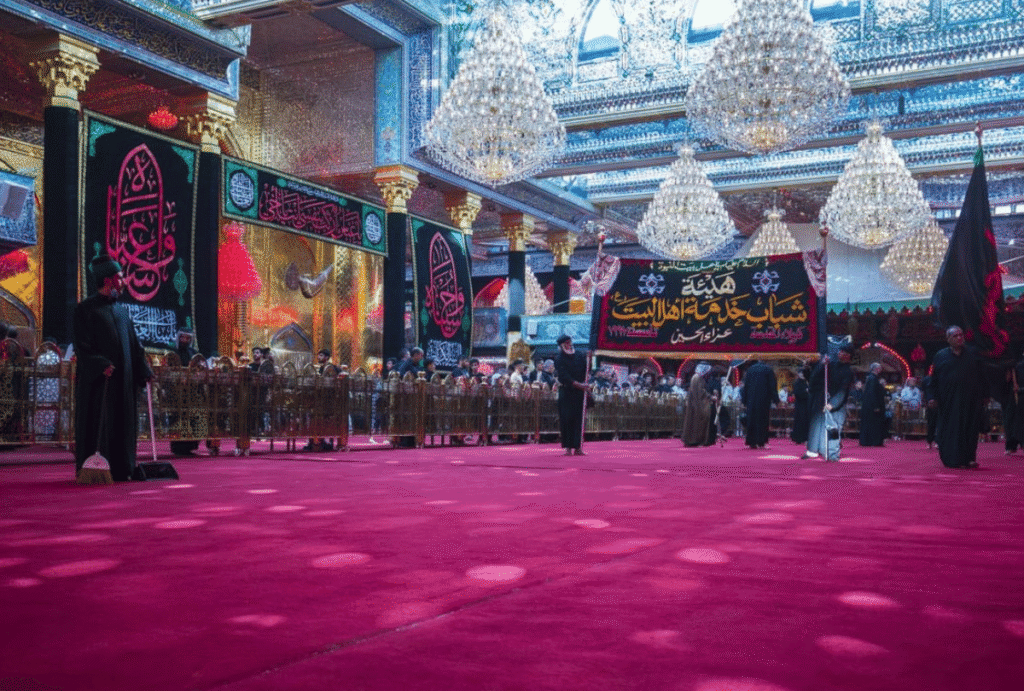
The story of Karbala is remembered every year through mourning, majalis, acts of worship and the journey of Arbaeen. However, the message of Imam Hussain (as) is not limited to a particular season. The lessons of courage, sacrifice, justice and compassion are meant to guide believers throughout the year.
Arbaeen reminds us that remembrance is not only about looking back at history. It is about carrying forward the principles that Imam Hussain (as) stood for and allowing them to shape our choices, relationships and responsibilities.
The Holy Quran reminds us:
“Therefore, do (your duty and) remind (the people) if reminding benefits (them).” (87:9)
Remembering Karbala allows us to reconnect with its message and ask an important question: how can we bring the values of Imam Hussain (as) into our daily lives?
Here are seven ways to keep the message of Karbala alive throughout the year.
#1: Turn remembrance into reflection
Karbala carries deep emotional and spiritual meaning, but remembrance becomes more powerful when it leads to reflection and personal growth.
The events of Ashura encourage believers to examine their own actions, choices and priorities. Reflecting on Imam Hussain’s (as) sacrifice helps us recognise where we may need more courage, patience or sincerity in our own lives.
Practical ways to reflect on Karbala throughout the year include:
Reading and learning about Karbala regularly, not only during Muharram and Safar.
Discussing lessons from Imam Hussain (as) with family members.
Asking how the principles of Karbala apply to modern challenges.
Reflecting on areas where we can improve our relationship with Allah (swt) and others.
The purpose of remembering Karbala is not only to know what happened, but to understand what it asks from us today.
#2: Stand firm for justice and truth
One of the greatest lessons of Karbala is the importance of standing for truth, even when doing so requires sacrifice.
Imam Hussain (as) demonstrated that faith is not separate from justice. His stand against oppression continues to inspire believers to challenge wrongdoing, protect dignity and remain committed to what is right.
Justice begins with everyday actions. It can be seen in how we treat our families, colleagues, neighbours and communities.
We can honour the message of Karbala by:
Being fair when resolving disagreements.
Speaking respectfully against injustice.
Supporting people facing hardship.
Avoiding silence when others are treated unfairly.
Living with justice allows the values of Karbala to become part of our character.
#3: Make service a way of life
The Arbaeen pilgrimage is a powerful example of generosity and service. Millions of people come together to provide food, water, shelter and support to visitors, often serving without expecting anything in return.
Service does not need to be limited to large acts. Small, consistent actions can create meaningful change.
Throughout the year, we can:
Volunteer within our local communities.
Support charitable initiatives.
Help families experiencing difficulty.
Encourage children to participate in acts of kindness.
When service becomes part of our routine, we continue the compassion and generosity associated with Arbaeen.
#4: Build unity through the message of Karbala
Arbaeen brings together people from different cultures, languages and backgrounds. The gathering reflects how the message of Imam Hussain (as) connects people through shared faith and values.
Karbala teaches that true unity is built through compassion, humility and a commitment to what is right.
Communities can strengthen this spirit by:
Creating welcoming spaces for everyone.
Supporting community activities beyond Muharram and Safar.
Focusing on shared values rather than differences.
Encouraging cooperation between families and organisations.
Keeping Karbala alive means allowing its message to bring people closer together.
#5: Practise humility and good character
The atmosphere of Arbaeen reminds believers that honour comes through humility and service, not status or recognition.
During the pilgrimage, many people dedicate their time to serving others. They prepare food, clean spaces and assist visitors, showing that acts of kindness are a source of dignity.
The same principles can guide our everyday behaviour.
We can practise humility by:
Apologising when we make mistakes.
Treating others with respect.
Helping without seeking praise.
Valuing good character over appearance.
The message of Karbala lives through the way we treat people.
#6: Teach the next generation about Karbala
Keeping Karbala alive requires sharing its lessons with future generations. Children and young people should understand not only what happened at Karbala, but why its message continues to matter.
Lady Zainab (sa) played a crucial role in preserving and sharing the message of Karbala after Ashura. Through her courage, patience and strength, the story of Imam Hussain (as) reached future generations.
Families can continue this legacy by:
Sharing age-appropriate stories about Karbala.
Discussing values such as honesty, courage and compassion.
Encouraging children to serve others.
Connecting religious gatherings with practical lessons.
Teaching Karbala ensures that its message continues beyond one generation.
#7: Make Karbala a year-round commitment
Karbala is not only remembered during Muharram and Safar. Its message is a lifelong commitment that influences how believers worship, give, serve and respond to the world around them.
The Prophet’s (saww) family and the followers of Ahlulbayt (as) have always emphasised the importance of keeping the remembrance of Imam Hussain (as) alive.
This love should inspire action. Keeping the memory of Imam Hussain (as) alive means allowing his values to appear in our decisions throughout the year.
This can include:
Maintaining regular learning and reflection.
Continuing charitable efforts.
Strengthening family relationships.
Supporting those in need.
Continue the message of Karbala through lasting impact
The lessons of Karbala are not confined to a season of mourning. Muharram and Safar can become the beginning of a commitment that continues throughout the year.
By transforming remembrance into action, we can honour Imam Hussain’s (as) sacrifice through compassion, service and meaningful support for others.
Let your remembrance continue long after Muharram and Safar end.
Continue the message of Karbala by supporting projects that create ongoing reward and lasting impact. Through acts of generosity and sustainable support, we can help build a legacy that lives on, inspired by the values Imam Hussain (as) stood for.
Frequently asked questions
What is the main message of Karbala?
The main message of Karbala is the importance of standing for truth, justice and faith, even in difficult circumstances. Imam Hussain (as) demonstrated courage, sacrifice and commitment to protecting Islamic values.
Why is Arbaeen important in remembering Imam Hussain (as)?
Arbaeen provides an opportunity for believers to renew their connection with Imam Hussain (as) and reflect on the values of sacrifice, service, unity and devotion that define his legacy.
How can we keep the message of Karbala alive throughout the year?
We can keep the message of Karbala alive through regular reflection, acts of service, supporting those in need, learning about Ahlulbayt (as) and applying the lessons of Imam Hussain (as) in daily life.
What lessons can we learn from Imam Hussain (as)?
Imam Hussain (as) teaches believers about courage, patience, justice, sacrifice and remaining committed to truth regardless of challenges.
How can families teach children about Karbala?
Families can teach children about Karbala through age-appropriate stories, discussions, activities and by showing how its values apply to kindness, honesty and helping others.
How can giving continue the message of Karbala?
Giving allows believers to transform remembrance into action by supporting people and projects that create lasting benefit. Acts of generosity reflect the compassion and service associated with Imam Hussain’s (as) legacy.
More from blog
Bridging the Digital Divide Through Education
Discover how education and technology can help bridge the digital divide and create equal learning opportunities. Support children with the tools for…
Can Sadaqah Be More Than Money?
Sadaqah isn't only about giving money. Discover how your time, kindness, knowledge and actions can become acts of charity in Islam with…
The Future Starts with Education
Invest in education and help vulnerable children build skills, confidence and opportunity. Support The Zahra Trust’s Back to School appeal today.