
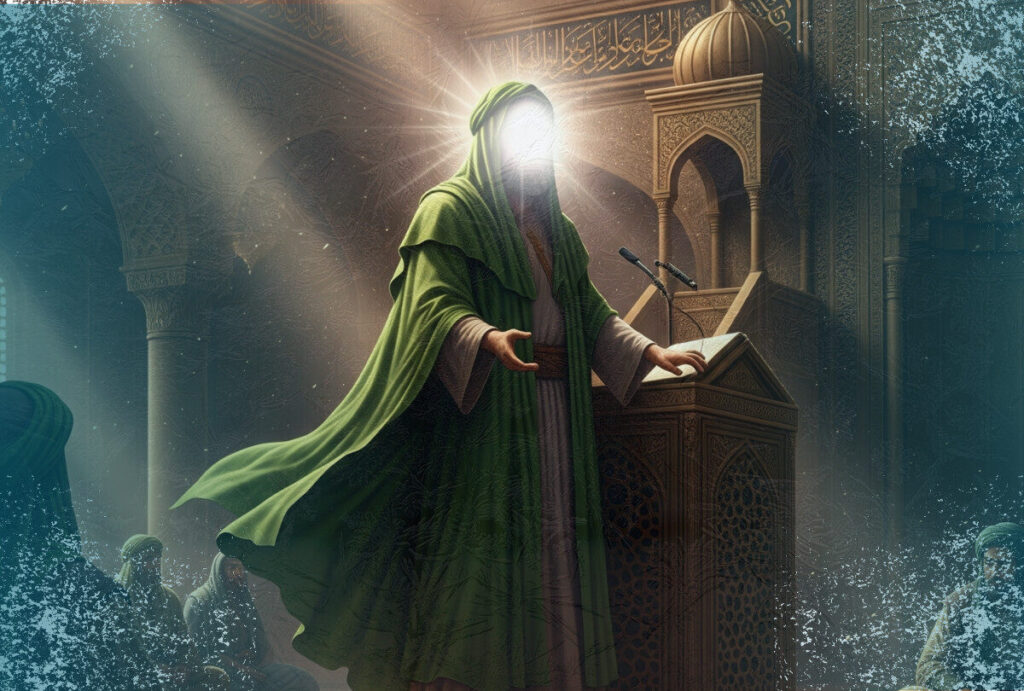
What sets leadership in Islam apart from much of the leadership we see in today’s world?
While modern leadership often revolves around authority and success, Islam teaches that real leadership is about service, justice, and compassion.
The Qur’an states:
“Surely Allah commands you… to make over the trusts to their owners and that when you judge between people, judge with justice.” (4:58)
This verse reminds us that leadership is a sacred trust — calling each person to act with honesty, empathy, and integrity.
Prophet Muhammad (saww) and Imam Ali (as) led their communities with fairness and mercy, embodying these values in every decision.
These teachings show us that justice and compassion were lived principles in the leadership of the Ahlulbayt (as), not mere ideals.
Imam Ali (as): A Model of Justice and Compassion
Imam Ali (as) remains a shining example of moral and spiritual leadership.
When he governed the Muslim community, he led not through fear or dominance but through justice and compassion.
He famously said:
“Justice is the base that supports the whole world.” (Matalib al-Sa’ul, p.61)
Imam Ali (as) treated everyone fairly — even those who opposed him.
He cared for the poor, orphans, and widows, often delivering food without revealing his identity.
For him, leadership was not privilege but responsibility.
He believed in protecting dignity, ensuring fairness, and standing for truth.
Through his example, we learn that:
- Justice = fairness
- Compassion = mercy
- Leadership = service
Together, they create a truly moral and thriving society.
Bringing Justice and Compassion to Today’s World
Imam Ali (as) showed that leadership is responsibility, not power.
His teachings remain relevant today, especially in a world where inequality and injustice persist.
By applying justice and compassion in our homes, workplaces, and communities, we create safe, dignified spaces for all.
True leadership — whether in public roles or everyday interactions — comes from serving others with integrity.
Putting Justice and Compassion into Action
Through your support, justice and compassion become lived realities.
Every programme that helps vulnerable families reflects Islamic leadership in action.
By uplifting others, you help create resilient, fair, and caring communities across the UK.
True leadership is measured not by authority but by service.
True leadership in Islam is built on justice, compassion, and service.
By following the example of Imam Ali (as) and the Ahlulbayt (as), every believer can inspire fairness and kindness within their community.
Share this message to encourage others to lead with integrity and mercy.
FAQ
Leadership in Islam is a trust, guided by justice, compassion, and service — not privilege or power.
He ruled with fairness, cared for the vulnerable, and lived humbly, showing that leadership is service.
Yes. Justice and compassion strengthen families, workplaces, and communities.
By acting with fairness, helping others, and being compassionate in daily interactions.
Because societies cannot thrive without fairness, integrity, and mercy — values Imam Ali (as) emphasised.
More from blog

Bridging the Digital Divide Through Education
Discover how education and technology can help bridge the digital divide and create equal learning opportunities. Support children with the tools for…
Can Sadaqah Be More Than Money?
Sadaqah isn't only about giving money. Discover how your time, kindness, knowledge and actions can become acts of charity in Islam with…

The Future Starts with Education
Invest in education and help vulnerable children build skills, confidence and opportunity. Support The Zahra Trust’s Back to School appeal today.