
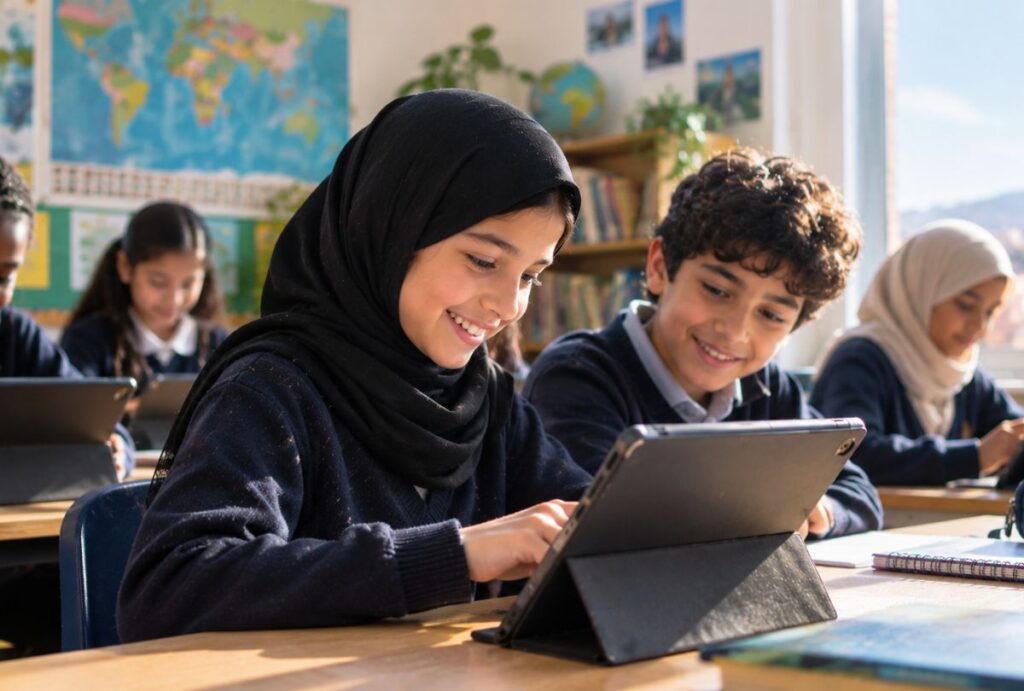
Education has always been a pathway to knowledge, confidence and opportunity. Today, technology plays an increasingly important role in that journey. From online learning platforms and digital textbooks to assistive technologies and mobile education, technology can help students access learning opportunities that may otherwise be out of reach.
However, having a device or an internet connection does not automatically create equal access to education. The digital divide in education is a broader issue involving connectivity, affordability, digital skills, relevant content and the infrastructure needed to use technology effectively.
For children living in poverty or in underserved communities, these barriers can have a lasting impact. A student may have access to a smartphone but lack affordable data. A school may have computers but not enough teacher training to use them effectively. Educational resources may be available online but not in the language or format a learner needs.
Bridging the digital divide therefore means looking beyond access. It means using technology thoughtfully to ensure that every learner has a meaningful opportunity to learn, participate and develop the skills needed for the future.
The importance of knowledge is deeply rooted in Islam. The Quran reminds believers:
“…And say, ‘O My Lord! increase me in knowledge.’” (20:114)
This verse highlights the enduring value of seeking knowledge and growing in understanding.
How Technology Creates More Equal Learning Opportunities
When technology is introduced with equity in mind, it can help remove some of the barriers that prevent children from accessing quality education.
Expanding Access to Quality Educational Content
Digital platforms can connect learners with educational materials beyond what is available in their immediate surroundings. Online courses, digital libraries, open educational resources and recorded lessons can give students access to textbooks, curricula and instruction that may otherwise be difficult to obtain.
This can be particularly valuable for children in remote or under-resourced communities. Instead of educational opportunity being determined solely by geography, digital resources can help bring learning to where children are.
Technology can also make educational content available at different times and in different formats, helping learners study according to their circumstances.
Personalising the Learning Experience
Every child learns differently. Some may need additional explanations or more time to understand a concept, while others may benefit from more advanced material.
Adaptive learning technologies can provide personalised exercises, feedback and pacing. When used appropriately, these tools can complement teachers by helping identify areas where individual learners need additional support.
Artificial intelligence also has the potential to make educational resources more responsive to individual needs. However, technology works best as part of a supportive educational environment rather than as a replacement for teachers.
Supporting Children with Different Abilities
Technology can make learning more accessible for children with disabilities and different learning needs.
Screen readers can support learners with visual impairments, while speech-to-text tools can help those who have difficulty writing. Captions can make video content more accessible, and audio, visual and interactive resources can provide alternative ways to understand information.
This approach aligns with the principles of Universal Design for Learning, which encourages educators to provide multiple ways for students to access information, engage with lessons and demonstrate what they have learned.
Breaking Down Language Barriers
Language should not prevent a child from benefiting from education.
Multilingual digital resources and translation technologies can help students engage with lessons in a language they understand more comfortably. This can be especially important in diverse classrooms and communities where children may be learning in a language different from the one spoken at home.
Localising educational content is equally important. Resources are more meaningful when they reflect learners’ cultures, communities and everyday experiences.
Making Learning More Flexible
Digital education can also allow children to learn beyond the traditional classroom.
Mobile-first platforms, downloadable lessons and low-bandwidth resources can help learners continue their education when transport, distance, family responsibilities or other circumstances make regular attendance difficult.
This flexibility is particularly valuable in communities where internet access is unreliable. Technology designed for low-connectivity environments can help prevent students from being excluded simply because they cannot maintain a constant online connection.
What It Takes to Make Technology Truly Equitable
Providing technology is only the first step. Without the right support, digital initiatives can unintentionally reinforce existing inequalities.
Reliable electricity and internet connectivity are fundamental. Affordable devices and data are also important, as families can face additional costs through repairs, charging, software and ongoing connectivity.
Digital literacy matters too. Teachers need training that goes beyond learning how to operate a device. They need support in understanding how technology can improve teaching, personalise learning and help students with different needs.
Students also need digital skills so that they can use technology safely, confidently and effectively.
Another essential consideration is inclusive and locally relevant content. Educational tools should take account of language, culture, accessibility and the realities of the communities they serve.
Finally, governments, schools, charities and technology providers need to consider whether digital programmes are genuinely improving educational outcomes. Success should not be measured simply by the number of devices distributed or platforms launched. It should also be measured by whether children are learning, participating and gaining skills for the future.
Learning from the Example of Imam Ali (as)
The Islamic tradition places significant emphasis on the value of knowledge. Education is not simply about acquiring information. It can be a means of developing wisdom, capability and a greater understanding of the world.
Imam Ali (as) is reported to have said,
“There is no treasure more profitable than knowledge.” (al-Kafi, v.8, p.19, n.4)
This perspective offers an important way of thinking about educational investment today. A device, internet connection or training programme is valuable not simply because it is technological. Its real value lies in what it enables a child to learn and what that knowledge can make possible in the future.
Bridging the digital divide is therefore about more than giving children access to technology. It is about helping them turn access into knowledge, skills and opportunity.
Building a Future Through Education and Technology
The digital divide will not disappear through technology alone. It requires investment in infrastructure, teacher development, inclusive design, relevant educational content and the long-term support needed to help children make meaningful use of digital tools.
The Prophet (saww) is reported to have said,
“Seek knowledge even in China, for verily to seek knowledge is an obligation on every Muslim.” (Kanz al-Ummal, n. 28697)
For vulnerable children and young people, poverty can make that pursuit of knowledge considerably harder. Limited access to technology, training and educational resources can restrict opportunities long before a child reaches adulthood.
This is why investing in education today can help create opportunity tomorrow.
A child does not only need to learn for today. They need the skills to build tomorrow.
For many vulnerable children and young people, poverty can limit access to technology, skills training and educational opportunities. They may have enormous potential, but without the right support, that potential can remain out of reach.
Your donation can help provide technology, skills training and education support, giving children and young people the tools they need to learn, grow and prepare for the future.
Give more than a lesson. Give a future.
Help children build the skills and confidence to shape tomorrow. Support education that can open doors, create opportunity and help young people move forward.
Frequently Asked Questions
What is the digital divide in education?
The digital divide in education refers to unequal access to technology, internet connectivity, digital skills and relevant educational resources. It can affect children based on factors such as income, location, language and ability.
How can technology help bridge the digital divide?
Technology can expand access to educational content, personalise learning, support children with disabilities, reduce language barriers and enable flexible learning. These benefits are strongest when technology is combined with reliable infrastructure, affordability and appropriate support.
Why is digital literacy important for students?
Digital literacy helps students use technology safely, confidently and effectively. It allows them to find and assess information, communicate, learn independently and develop skills that can support their future education and employment.
How can technology support children with disabilities?
Assistive technologies such as screen readers, speech-to-text tools and captioning can make educational content more accessible. Digital resources can also provide multiple ways for children to engage with lessons and demonstrate their understanding.
What can educators do to make digital learning more inclusive?
Educators can assess students’ access to devices and connectivity, use mobile-friendly and low-bandwidth resources, provide different learning formats, localise content and receive training in effective educational technology. Monitoring outcomes can also help identify which students need additional support.
More from blog
Can Sadaqah Be More Than Money?
Sadaqah isn't only about giving money. Discover how your time, kindness, knowledge and actions can become acts of charity in Islam with…

The Future Starts with Education
Invest in education and help vulnerable children build skills, confidence and opportunity. Support The Zahra Trust’s Back to School appeal today.
Rebuilding Futures Through Education: Restoring Hope, Dignity and Opportunity
When a community experiences crisis, the impact reaches far beyond the immediate moment. Conflict, poverty, and displacement can interrupt a child’s education,…