
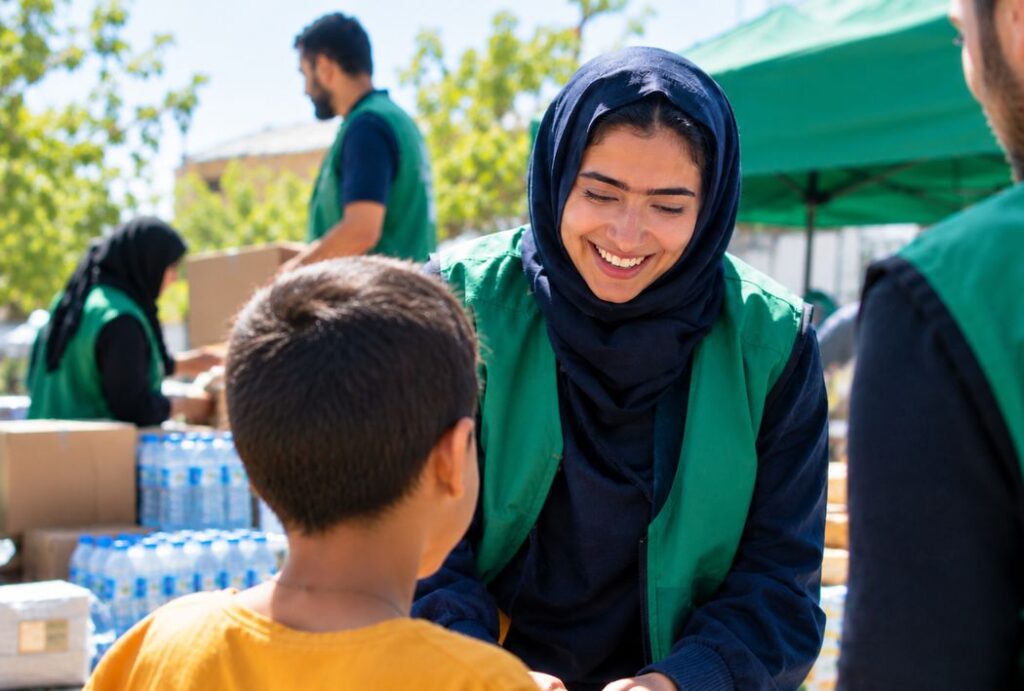
You may already know The Zahra Trust as a humanitarian organisation supporting people facing poverty, conflict and hardship.
You may have seen our appeals for food, clean water, education or emergency aid.
But there is much more to The Zahra Trust than you might realise.
Our work has grown over many years, guided by the teachings of Islam and the example of the Ahlulbayt (as).
Here are five things you might not know about The Zahra Trust.
1. The Zahra Trust Has Been Serving Communities Since 2008
The Zahra Trust was founded in 2008.
Our mission is not simply to respond when a crisis happens.
We want to help people move towards stability, dignity and greater self-sufficiency.
That means providing immediate assistance when people need it most, while also supporting longer-term solutions.
From food and emergency relief to education, healthcare, clean water and livelihoods, our work is about helping people build a better future.
2. The Zahra Trust Is Part of a Global Four-Region Team
The Zahra Trust may have started with a UK presence, but our work is now supported by teams across four regions:
- The United Kingdom
- The United States
- Canada
- Australia
Each regional team has an important role to play.
They help raise awareness, support donors, coordinate campaigns and connect communities with our wider humanitarian work.
Although these teams are based in different parts of the world, they share one mission: to alleviate hardship and support vulnerable people and communities.
This means that when you support The Zahra Trust in the UK, you are becoming part of something much bigger than a single local campaign.
You are joining a global community inspired by faith, compassion and service.
3. The Zahra Trust Helps Muslims Fulfil Their Religious Giving
For Muslims, giving is not simply about charity.
It can also be part of our religious responsibility.
The Zahra Trust supports Muslims who want to fulfil forms of Islamic giving including Khums, Zakat and Sadaqah.
This allows Khums funds to support approved welfare and humanitarian projects, as well as those eligible to receive Sehme Sadat.
Khums can therefore become more than an act of financial giving.
It can become a way of supporting people who are struggling while fulfilling an important religious responsibility.
For many of us, this is an important part of why we choose to give.
We want our charity to be meaningful, responsible and in accordance with the teachings of our faith.
4. The Zahra Trust Doesn’t Only Provide Emergency Aid
When we think about humanitarian work, we might picture food parcels, emergency shelters or clean water being delivered during a crisis.
These things are incredibly important.
But lasting change often requires more.
The Zahra Trust also supports programmes designed to help people become more self-sufficient.
This includes skills training, microfinance, education and income-generation opportunities.
For example, skills programmes can help women learn practical, income-generating skills.
Microfinance initiatives can help vulnerable families establish small businesses and build sustainable sources of income.
Education can help children develop knowledge and opportunities that can shape the rest of their lives.
The aim is not simply to provide support for today.
It is to help create possibilities for tomorrow.
5. Mowkeb 470 Is About Much More Than Arbaeen
For many Shia Muslims, Arbaeen is a deeply spiritual time.
Millions of people travel towards Karbala to remember Imam Hussain (as), whose sacrifice continues to inspire generations.
For more than a decade, The Zahra Trust has operated Mowkeb 470 on the road between Najaf and Karbala.
During Arbaeen, the Mowkeb provides food, water, rest facilities and other essential support for pilgrims.
But Mowkeb 470 is not only active during Arbaeen.
The site is also used throughout the year for aid distribution, adult training and children’s classes, and has supported widows and orphans living in the surrounding community.
It is a beautiful example of how service inspired by Imam Hussain (as) can continue throughout the year.
Because serving others is not only something we do during a particular season.
It is a responsibility we carry with us.
What Does the Qur’an Teach Us About Helping Others?
“…Help one another in righteousness and piety…” (Qur’an 5:2)
This verse reminds us that goodness is something we can build together.
One person may give.
Another may fundraise.
Someone else may volunteer.
Another may share an appeal.
Together, these actions can become something much greater.
The work of The Zahra Trust is only possible because people choose to take part.
Inspired by the Ahlulbayt (as)
For Muslims, service to others is deeply connected to the example of the Ahlulbayt (as).
The life of Imam Hussain (as) reminds us of sacrifice.
The life of Sayyida Zainab (sa) reminds us of courage and resilience.
The generosity of Imam Ali (as) reminds us to care for those who are vulnerable.
Their examples encourage us not simply to feel compassion, but to act upon it.
This is at the heart of The Zahra Trust’s work.
We want to help people facing hardship while protecting dignity, creating opportunity and strengthening communities.
How Can You Get Involved With The Zahra Trust?
You don’t have to wait for the perfect moment to make a difference.
You can donate.
You can give your Khums, Zakat or Sadaqah.
You can support a Sadaqah Jariyah project.
You can fundraise with your family, friends, mosque or community.
You can volunteer your time or skills.
You can share an appeal with someone who may be able to help.
You can choose to make your giving regular.
Every contribution becomes part of a wider effort to support people experiencing hardship.
Your Giving Can Become Part of Something Bigger
Sometimes we underestimate what one act of generosity can achieve.
A donation can become food.
Food can become strength.
Education can become opportunity.
A water project can become health and dignity.
Skills training can become an income.
A small act of giving can become part of a much bigger story.
The Zahra Trust exists because people choose to care.
And you can be part of that story too.
May Allah (swt) accept our efforts, allow us to follow the example of the Ahlulbayt (as), and make us a means of goodness for others.
Frequently Asked Questions
When was The Zahra Trust founded?
The Zahra Trust was founded in 2008. Since then, it has grown into a global faith-based humanitarian organisation supporting communities through relief and development programmes.
What does The Zahra Trust do?
The Zahra Trust provides humanitarian and development support, including food aid, medical care, education, clean water, emergency relief and programmes supporting vulnerable people.
Is The Zahra Trust a Shia charity?
The Zahra Trust is rooted in Islamic values and guided by the teachings of the Holy Household (as). Its work includes supporting Shia Muslims in fulfilling religious giving such as Khums, while providing humanitarian assistance to people and communities in need.
Can I give Khums through The Zahra Trust?
Yes. The Zahra Trust has permission from leading Maraji to collect Khums, including Ayatollah Sayyid Ali al-Sistani (ha). Khums is distributed in accordance with the relevant religious guidance.
Where does The Zahra Trust work?
The Zahra Trust supports communities across different regions of the world, including parts of the Middle East, Asia and Africa. Its work can also expand to other areas when humanitarian emergencies arise.
How can I support The Zahra Trust in the UK?
You can donate, give Khums, Zakat or Sadaqah, fundraise, volunteer or share The Zahra Trust’s appeals with your community. UK supporters can also use Gift Aid where eligible.
Can I fundraise for The Zahra Trust?
Yes. The Zahra Trust welcomes fundraising support. You can organise a fundraiser with your family, friends, mosque, school, workplace or wider community.
Can I volunteer with The Zahra Trust?
Yes. There are different ways to volunteer, including helping with fundraising, events, community outreach and other activities. Some specialist overseas opportunities may also be available for appropriately qualified volunteers.
What is Mowkeb 470?
Mowkeb 470 is The Zahra Trust’s service centre on the Najaf–Karbala road. During Arbaeen, it provides food, water, rest facilities and other support for pilgrims. The site also supports year-round community, education and training activities.
How can my donation help someone become self-sufficient?
The Zahra Trust supports longer-term programmes such as education, skills training, microfinance and income-generation initiatives. These programmes aim to help vulnerable people build greater stability and independence.
More from blog
Bridging the Digital Divide Through Education
Discover how education and technology can help bridge the digital divide and create equal learning opportunities. Support children with the tools for…
Can Sadaqah Be More Than Money?
Sadaqah isn't only about giving money. Discover how your time, kindness, knowledge and actions can become acts of charity in Islam with…
The Future Starts with Education
Invest in education and help vulnerable children build skills, confidence and opportunity. Support The Zahra Trust’s Back to School appeal today.