
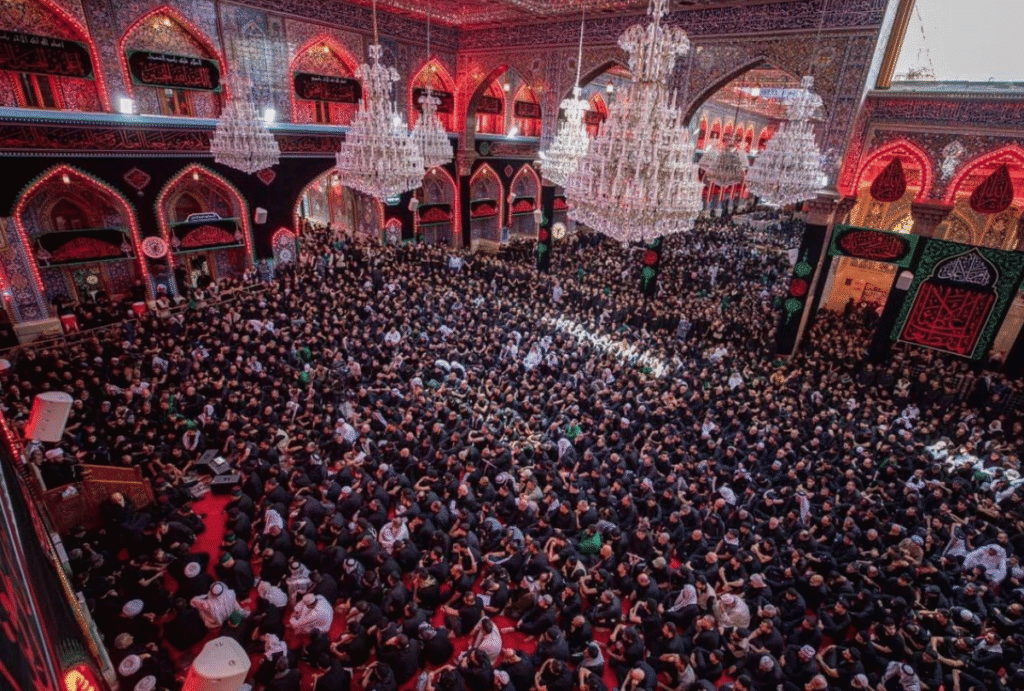
Every year, millions of people take part in the Arbaeen journey, travelling towards Karbala to honour Imam Hussain (as) and commemorate his sacrifice. Unlike any other pilgrimage, this journey is not simply about reaching a destination. It is an expression of love, loyalty, remembrance, and commitment to the values Imam Hussain (as) stood for.
From the long walks under the sun to the countless acts of generosity offered by strangers, Arbaeen brings together people from different backgrounds in a shared movement of faith and devotion. Pilgrims walk not for comfort, recognition, or worldly gain, but to renew their connection with the message of Karbala: standing for truth, justice, and dignity.
The significance of loving and honouring the family of the Prophet (saww) is highlighted in the Quran:
For many believers, Arbaeen represents a living expression of this love, transforming remembrance into action.
The meaning behind the Arbaeen journey
Arbaeen takes place forty days after Ashura, marking the end of the traditional mourning period following the martyrdom of Imam Hussain (as) and his companions at Karbala. The pilgrimage serves as a powerful reminder of sacrifice, resilience, and unwavering faith.
The walk towards Karbala is often physically demanding. Many pilgrims travel long distances on foot, facing heat, exhaustion, and difficult conditions. Yet, these challenges become part of the spiritual experience. Each step represents dedication and a willingness to follow the path of Imam Hussain (as).
The journey is not centred on hardship alone. It is filled with compassion, brotherhood, and generosity. Along the routes leading to Karbala, thousands of temporary service stations known as mawakib provide food, water, shelter, medical support, and assistance to pilgrims completely free of charge.
This culture of giving reflects the spirit of Karbala itself: serving others, protecting dignity, and putting faith into practice.
A global gathering of faith and unity
One of the most remarkable aspects of Arbaeen is its scale. Millions of people from across the world gather each year, creating one of the largest religious gatherings globally.
However, what makes Arbaeen unique is not only the number of people who participate. It is the atmosphere created by those who walk together. People of different ages, cultures, languages, and social backgrounds come together with one shared purpose: honouring Imam Hussain (as).
The journey creates a sense of unity rarely experienced elsewhere. A wealthy traveller and a person with limited means may walk the same path, eat at the same service stations, and share the same moments of devotion. Social differences become secondary, while the values of compassion, humility, and faith take centre stage.
The Quran reminds believers of the importance of respecting what is sacred:
For pilgrims, honouring Imam Hussain (as) through Arbaeen is a deeply meaningful act of devotion and reverence.
The power of service along the path of Hussain (as)
The generosity shown during Arbaeen is one of the journey’s defining features. Ordinary people dedicate their time, resources, and energy to serving pilgrims. Families open their homes, volunteers prepare meals, and communities work together to ensure visitors are cared for.
This spirit of service connects directly to the teachings of the Ahlulbayt (as). Supporting others and easing their difficulties are central values within Islamic tradition.
Imam Hussain’s (as) sacrifice was not only about what happened at Karbala; it was about preserving principles that continue to inspire generations. Arbaeen keeps those principles alive by encouraging people to serve, support, and care for one another.
The importance of visiting Imam Hussain (as) is also emphasised in narrations from the Ahlulbayt (as).
For pilgrims, the journey to Karbala is therefore not just a physical journey, but a spiritual opportunity for renewal and closeness to Allah (swt).
Following the example of Imam Hussain (as)
The legacy of Imam Hussain (as) continues to inspire millions because his stand at Karbala represents universal values: courage, justice, patience, and resistance against oppression.
Arbaeen allows believers to reflect on these qualities and consider how they can apply them in their own lives. The walk becomes a personal commitment to carry forward the message of Imam Hussain (as) beyond the streets of Karbala.
The connection between faith and remembrance is deeply rooted within Islamic teachings.
This narration reflects the profound impact of Imam Hussain’s (as) sacrifice and the lasting grief felt by those who honour his mission.
Arbaeen transforms that grief into positive action. It reminds people that remembering Hussain (as) means continuing his values through kindness, justice, and service.
Why Arbaeen remains a unique spiritual experience
Many journeys take people from one place to another, but Arbaeen represents something deeper. It is a journey of the heart, where every step carries meaning and every act of service becomes a form of devotion.
For believers, this highlights the special place of Arbaeen within Islamic spirituality and the connection it creates between devotion, remembrance, and identity.
The journey is unique because it brings together mourning and hope, personal reflection and collective action, hardship and generosity. It is a reminder that the message of Imam Hussain (as) continues to live through those who walk, serve, and sacrifice.
Walking with Hussain (as): Continuing the spirit of Arbaeen
The Arbaeen journey is unlike any other because it represents more than movement towards a place. It is a journey of devotion, remembrance, unity, and service inspired by Imam Hussain (as). Millions walk towards Karbala each year, carrying forward a message that continues to inspire generations.
You can also be part of this movement of compassion and devotion. Let your giving walk beside them by supporting the people and communities serving this extraordinary journey. Together, we can continue the movement of Hussain (as) and help strengthen the spirit of service that defines Arbaeen.
Frequently asked questions
What is the Arbaeen journey?
The Arbaeen journey is an annual pilgrimage to Karbala that takes place forty days after Ashura. Millions of people walk to honour Imam Hussain (as), remember his sacrifice, and express their devotion to his message of justice and faith.
Why do people walk during Arbaeen?
Pilgrims walk as an act of devotion, remembrance, and loyalty to Imam Hussain (as). Each step represents commitment to the principles he stood for, including truth, compassion, and standing against injustice.
How long is the Arbaeen Walk?
The distance varies depending on where pilgrims begin their journey. Many people walk from Najaf to Karbala, which is around 80 kilometres, while others begin from much farther locations.
What makes Arbaeen different from other pilgrimages?
Arbaeen combines a large-scale pilgrimage with personal devotion and community service. The free hospitality offered by volunteers, along with the unity of millions of pilgrims, makes it unlike many other journeys.
Who can participate in Arbaeen?
People from different ages, cultures, and backgrounds participate in Arbaeen. While many attendees are Shia Muslims, the message of Imam Hussain (as) attracts people from many communities who value justice and sacrifice.
How can people support Arbaeen if they cannot attend?
Those unable to travel can support the spirit of Arbaeen by contributing to initiatives that assist pilgrims and communities serving this journey. Acts of generosity help continue the tradition of service connected to Imam Hussain (as).
More from blog
Bridging the Digital Divide Through Education
Discover how education and technology can help bridge the digital divide and create equal learning opportunities. Support children with the tools for…
Can Sadaqah Be More Than Money?
Sadaqah isn't only about giving money. Discover how your time, kindness, knowledge and actions can become acts of charity in Islam with…
The Future Starts with Education
Invest in education and help vulnerable children build skills, confidence and opportunity. Support The Zahra Trust’s Back to School appeal today.