
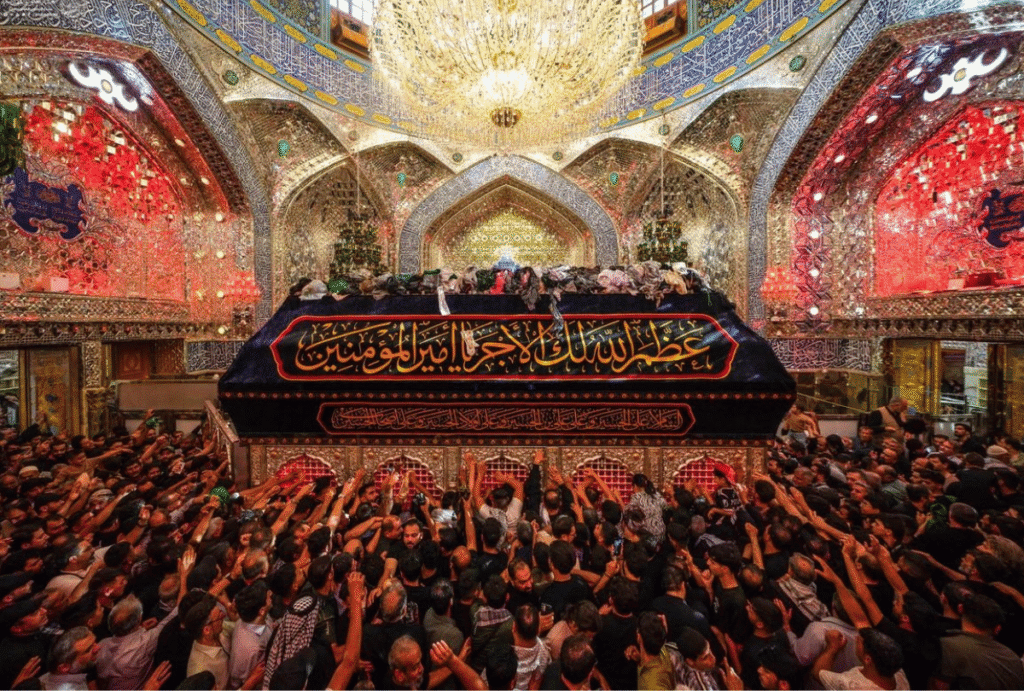
Every year, on the twentieth of Safar, millions of believers commemorate Arbaeen, marking forty days since the martyrdom of Imam Hussain (as) in Karbala. For many, it is a time of mourning, remembrance, and spiritual renewal.
At the heart of this day is Ziyarat Arbaeen, a devotional practice that allows believers to reaffirm their connection to Imam Hussain (as), whether they stand beside his blessed shrine or recite the ziyarat from wherever they are in the world.
More than a remembrance of a historical tragedy, Ziyarat Arbaeen is a declaration of loyalty to the Ahlulbayt (as), a rejection of injustice, and a commitment to living by the values that Imam Hussain (as) sacrificed everything to uphold.
Why is Arbaeen so significant?
Arbaeen marks the fortieth day after the martyrdom of Imam Hussain (as), his family, and his companions in Karbala. Throughout Islamic tradition, the number forty represents spiritual completion, reflection, and renewal. For this reason, Arbaeen is not simply the conclusion of the mourning period after Ashura. It is an opportunity for believers to renew their covenant with Allah (swt) and with the timeless mission of Imam Hussain (as).
The Holy Quran reminds believers of the importance of honouring what Allah (swt) has made sacred:
For many scholars, commemorating Imam Hussain (as) and preserving his legacy is among the greatest examples of venerating the sacred symbols of Allah (swt). Arbaeen therefore becomes not only a remembrance of Karbala, but also an expression of sincere faith rooted in the heart.
Understanding Ziyarat Arbaeen
Ziyarat Arbaeen refers to both the act of visiting Imam Hussain (as) on the day of Arbaeen and the specific ziyarat text traditionally recited on this occasion.
The recitation begins with salutations upon Imam Hussain (as), recognising his closeness to Allah (swt), his unwavering obedience, and the immense sacrifice he made to preserve the true message of Islam. It bears witness to the injustice inflicted upon him while affirming the believer's allegiance to his mission.
Although millions travel to Karbala each year to recite the ziyarat at the shrine of Imam Hussain (as), those who cannot make the journey also recite the text from their homes, mosques, or Islamic centres. In doing so, they spiritually connect themselves to the message of Karbala regardless of distance.
A sign of faith and loyalty
Among the most well-known narrations regarding Arbaeen is a hadith from Imam Hassan al-Askari (as), highlighting the unique status of this ziyarat within Shia Islam.
This narration demonstrates that Arbaeen is not merely a historical anniversary. Rather, it is recognised as one of the defining characteristics of a committed believer, reflecting a living relationship with Imam Hussain (as) and his cause.
Loving the Ahlulbayt (as) through action
Love for the family of the Holy Prophet (saww) is a central principle of Islam. The Quran makes this clear:
This love is not limited to emotion alone. It is demonstrated through remembrance, obedience, and following their example.
Reciting Ziyarat Arbaeen is one way believers express that love. Every salutation, testimony, and declaration within the ziyarat renews one's commitment to the values embodied by Imam Hussain (as), including sincerity, patience, courage, and complete submission to Allah (swt).
Following the example of the Ahlulbayt (as)
The legacy of Karbala did not end on the Day of Ashura. It continued through the courage and perseverance of the surviving members of the Ahlulbayt (as), particularly Sayyida Zainab (sa) and Imam Zain al-Abideen (as), who preserved and conveyed the truth despite immense hardship.
Their unwavering commitment ensured that the sacrifice of Imam Hussain (as) would never be forgotten. Without their efforts, the message of Karbala may not have reached future generations.
This teaches an important lesson for believers today. Loyalty to Imam Hussain (as) is not measured solely by grief. It is demonstrated through preserving his teachings, speaking against injustice, serving others, and living according to the principles for which he gave his life.
Ziyarat Arbaeen invites every believer to ask how they can carry that responsibility forward in their own community.
Keeping the spirit of Karbala alive
Arbaeen has become the largest annual pilgrimage in the world, bringing together millions of people from different cultures, languages, and backgrounds.
Yet the significance of Ziyarat Arbaeen extends far beyond the physical journey.
For those unable to visit Karbala, reciting the ziyarat remains a profound act of worship. It reminds believers that the message of Imam Hussain (as) belongs to every generation and every place.
The ziyarat encourages reflection on timeless values that remain just as relevant today, including justice, compassion, sacrifice, dignity, and unwavering faith in Allah (swt).
Through its words, believers renew their pledge to uphold these values in their own families, workplaces, and communities.
Forty days of remembrance
The significance of Arbaeen is also reflected in the traditions of the Ahlulbayt (as).
This narration illustrates the immense spiritual weight of the tragedy of Karbala. The mourning of Imam Hussain (as) extends beyond humanity itself, emphasising that his sacrifice transformed the course of Islamic history.
For believers, these forty days become a period of reflection, drawing closer to Allah (swt), and renewing one's commitment to the principles that Imam Hussain (as) defended.
Walking the path of Hussain (as) beyond Arbaeen
Ziyarat Arbaeen is far more than a commemoration of a historic event. It is a living expression of faith that strengthens our connection with Imam Hussain (as), renews our love for the Ahlulbayt (as), and inspires us to uphold justice, sincerity, and devotion in every aspect of our lives. Whether we stand in Karbala or remember from afar, the message remains the same: to continue walking the path that Imam Hussain (as) laid before us.
Today, millions journey towards Aba Abdillah (as). As this extraordinary movement of faith continues, let your giving walk beside them. By supporting the people and communities who serve the path of Imam Hussain (as), you can help sustain this remarkable expression of devotion for pilgrims and local families alike.
Frequently asked questions
What is Ziyarat Arbaeen?
Ziyarat Arbaeen is both the recommended visitation of Imam Hussain (as) on the twentieth of Safar and the specific ziyarat text recited on that day. It can be performed at the shrine in Karbala or recited from anywhere in the world.
Why is Ziyarat Arbaeen important?
Pilgrims walk as an act of devotion, remembrance, and loyalty to Imam Hussain (as). Each step represents commitment to the principles he stood for, including truth, compassion, and standing against injustice.
Is visiting Karbala required to perform Ziyarat Arbaeen?
No. While visiting Karbala on Arbaeen is highly recommended, believers who cannot travel may recite the Ziyarat Arbaeen from wherever they are and still participate spiritually in the remembrance.
Why is Arbaeen observed forty days after Ashura?
The fortieth day carries spiritual significance in Islamic tradition as a time of reflection and renewal. Arbaeen marks forty days after the martyrdom of Imam Hussain (as), providing an opportunity to renew one's commitment to his message.
What is the message of Ziyarat Arbaeen?
The ziyarat calls believers to remain loyal to Imam Hussain (as), reject oppression, seek justice, and follow the example of the Ahlulbayt (as) through faith, compassion, and service.
Where can I find the text of Ziyarat Arbaeen?
The recitation is widely available in recognised Shia devotional works such as Mafatih al-Jinan and through trusted Islamic organisations that provide the Arabic text alongside English translation.
More from blog

Bridging the Digital Divide Through Education
Discover how education and technology can help bridge the digital divide and create equal learning opportunities. Support children with the tools for…
Can Sadaqah Be More Than Money?
Sadaqah isn't only about giving money. Discover how your time, kindness, knowledge and actions can become acts of charity in Islam with…
The Future Starts with Education
Invest in education and help vulnerable children build skills, confidence and opportunity. Support The Zahra Trust’s Back to School appeal today.