
In today's world, it is easy to measure success by recognition, appreciation, or personal benefit. Acts of kindness are often shared online, achievements are celebrated publicly, and even generosity can become tied to praise. Islam, however, teaches a different standard. The greatest acts of service are those performed sincerely for the sake of Allah (swt), without expecting anything in return.
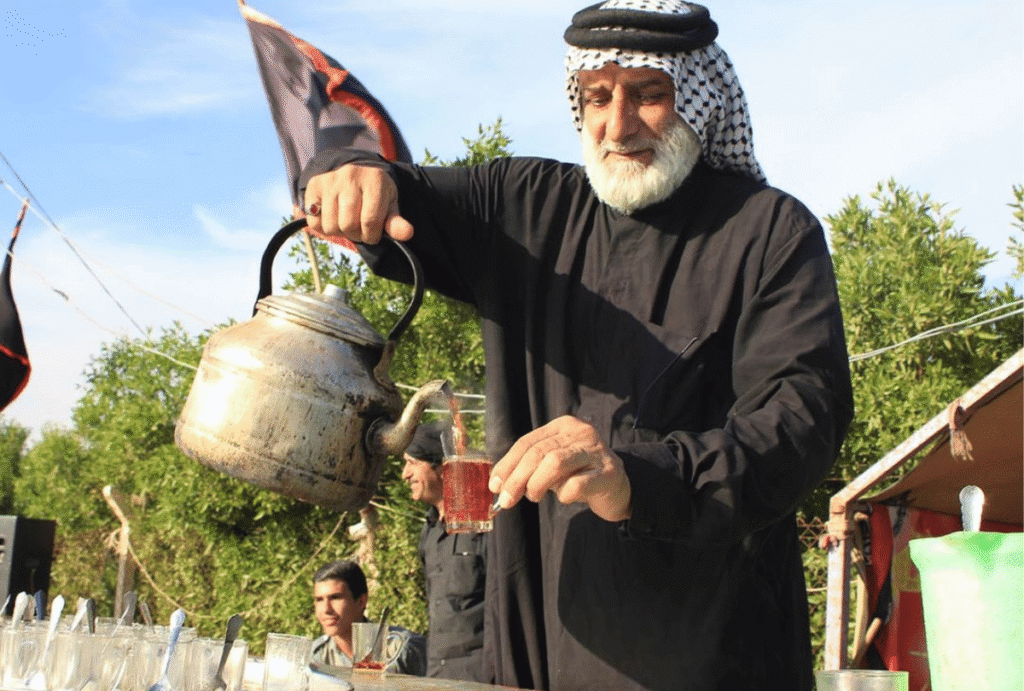
Every year, Arbaeen brings this lesson to life. Millions of pilgrims journey towards the shrine of Imam Hussain (as), while countless volunteers dedicate themselves to serving complete strangers. They prepare meals, distribute water, provide medical assistance, offer places to rest, clean the roads, and welcome every pilgrim with warmth and generosity. Their service is not motivated by payment or recognition. It is an expression of devotion to Allah (swt) and love for Aba Abdillah (as).
Arbaeen reminds us that true khidmah (service) is not transactional. It is an act of worship that transforms both the one who serves and the one who is served.
What Arbaeen teaches about selfless service
One of the most remarkable aspects of Arbaeen is the culture of giving that stretches across the entire route to Karbala. Families spend months, and sometimes an entire year, preparing to serve pilgrims. Many save from their own limited income so they can provide food, drinks, accommodation, transport, or medical care during the pilgrimage.
Their generosity is not based on abundance. Many give despite having very little themselves.
This spirit reflects the words of Allah (swt):
Those serving along the Arbaeen route do not calculate what they will receive in return. Their reward lies with Allah (swt), whose generosity far exceeds anything this world can offer.
When we adopt this mindset, even the smallest act of kindness becomes an opportunity to earn eternal reward.
Serving with sincerity, not recognition
The value of an action in Islam is measured not only by what we do, but by why we do it. A single sincere act performed purely for Allah (swt) can outweigh many deeds done for admiration or status.
Allah (swt) teaches:
Similarly, Imam al-Sadiq (as) is reported to have said:
This sincerity can be seen throughout Arbaeen. Volunteers rarely ask for acknowledgement. They serve because they view every pilgrim as a guest of Imam Hussain (as), making each act of service an opportunity to draw closer to Allah (swt).
Leaving expectations behind
One of the greatest obstacles to sincere service is expectation. We may expect thanks, appreciation, recognition, or even something in return. When those expectations are not met, disappointment can overshadow the good we intended to do.
Imam Ali (as) repeatedly warned against allowing expectations to shape our actions.
He is reported to have said:
"There is no end to expectation." (Ghurar al-Hikam, n.1010)
He is also reported to have said:
"The fruit of expectation is the spoilage of deeds." (Ghurar al-Hikam, n.4641)
In another narration, Imam Ali (as) is reported to have said:
"A man who has high expectations is deficient in his action." (Bihar al-Anwar, v.77, p.421, n.40)
These profound sayings encourage believers to free themselves from the desire for worldly reward. When service is tied to praise, it becomes fragile. When it is tied to Allah (swt), it becomes lasting.
Arbaeen demonstrates this lesson beautifully. Millions are served every year by people whose names will never be known. Their legacy is not fame, but sincerity.
Learning from the example of the Ahlulbayt (as)
The greatest example of selfless service comes from the Ahlulbayt (as), whose lives consistently reflected complete devotion to Allah (swt) and compassion towards others.
One of the clearest examples is found in the household of Imam Ali (as), Lady Fatima al-Zahra (sa), Imam Hassan (as), and Imam Hussain (as). After fasting for several days due to a vow, they prepared their evening meal only to be visited by someone in need. On successive nights, they gave away their food to a poor person, an orphan, and a captive, choosing to remain hungry themselves.
Their actions were so sincere that Allah (swt) revealed verses in Surah al-Insan praising them for feeding others solely for His sake, declaring that they sought neither reward nor thanks from those they helped.
Their example embodies the spirit that lives on during Arbaeen. Service is offered not because someone deserves it, nor because recognition is expected, but because serving others for the sake of Allah (swt) is itself an honour.
Imam al-Baqir (as) also advised:
"Equip yourself with low expectation for this world's life." (Tuhaf al-Uqul, n.286)
Reducing our expectations of this world allows us to increase our focus on pleasing Allah (swt). It shifts our perspective from what we receive to what we are able to give.
Making selfless service part of everyday life
The lessons of Arbaeen are not limited to the days of the pilgrimage. They can shape the way we live throughout the year.
Selfless service begins with intention. A smile, a helping hand, a charitable donation, checking on a neighbour, supporting an orphan, or volunteering our time can all become acts of worship when performed sincerely.
Allah (swt) reminds us:
Notice that the verse speaks of consistency. Giving is not confined to one moment or one season. Whether public or private, day or night, the believer continues to serve because their ultimate goal is the pleasure of Allah (swt).
Arbaeen invites every believer to adopt this mindset. We may never walk the route to Karbala, but we can still walk the path of selfless service wherever we are.
Serve the path of Hussain (as)
The spirit of Arbaeen is carried not only by the millions who undertake the journey, but also by the countless people who dedicate themselves to serving them with sincerity and sacrifice.
Every meal prepared, every bottle of water distributed, every place of rest offered, and every act of kindness reflects the timeless values taught by Imam Hussain (as). Supporting those who provide these essential services allows that spirit of khidmah to continue reaching millions of pilgrims.
Your generosity can help sustain the communities and mowkebs that welcome the zuwar with compassion and dignity. By supporting these efforts, your giving walks beside those journeying towards Imam Hussain (as), helping to continue a movement built upon faith, sacrifice, and service for the sake of Allah (swt).
May Arbaeen inspire us all to serve without seeking recognition, to give without expecting reward from people, and to make sincerity the foundation of every good deed.
Frequently asked questions
What does Arbaeen teach us about selfless service?
Arbaeen teaches that the highest form of service is performed purely for the sake of Allah (swt). Volunteers serve millions of pilgrims with food, water, shelter and care without expecting payment, recognition or personal benefit, reflecting the values taught by Imam Hussain (as).
Why is sincerity important when serving others in Islam?
Sincerity, or ikhlas, ensures that good deeds are accepted by Allah (swt). Islam teaches believers to serve others without seeking praise or status, focusing instead on earning Allah's pleasure and reward.
How can I practise selfless service in my daily life?
You can practise selfless service by helping others with a sincere intention, whether through charity, volunteering, supporting vulnerable people, assisting neighbours or performing small acts of kindness without expecting anything in return.
How does supporting Arbaeen services continue the message of Imam Hussain (as)?
Supporting mowkebs and other Arbaeen initiatives helps provide essential care for millions of pilgrims while preserving the culture of generosity, sacrifice and hospitality inspired by Imam Hussain (as). It enables more people to experience the spirit of serving solely for the sake of Allah (swt).
More from blog

Bridging the Digital Divide Through Education
Discover how education and technology can help bridge the digital divide and create equal learning opportunities. Support children with the tools for…
Can Sadaqah Be More Than Money?
Sadaqah isn't only about giving money. Discover how your time, kindness, knowledge and actions can become acts of charity in Islam with…
The Future Starts with Education
Invest in education and help vulnerable children build skills, confidence and opportunity. Support The Zahra Trust’s Back to School appeal today.