
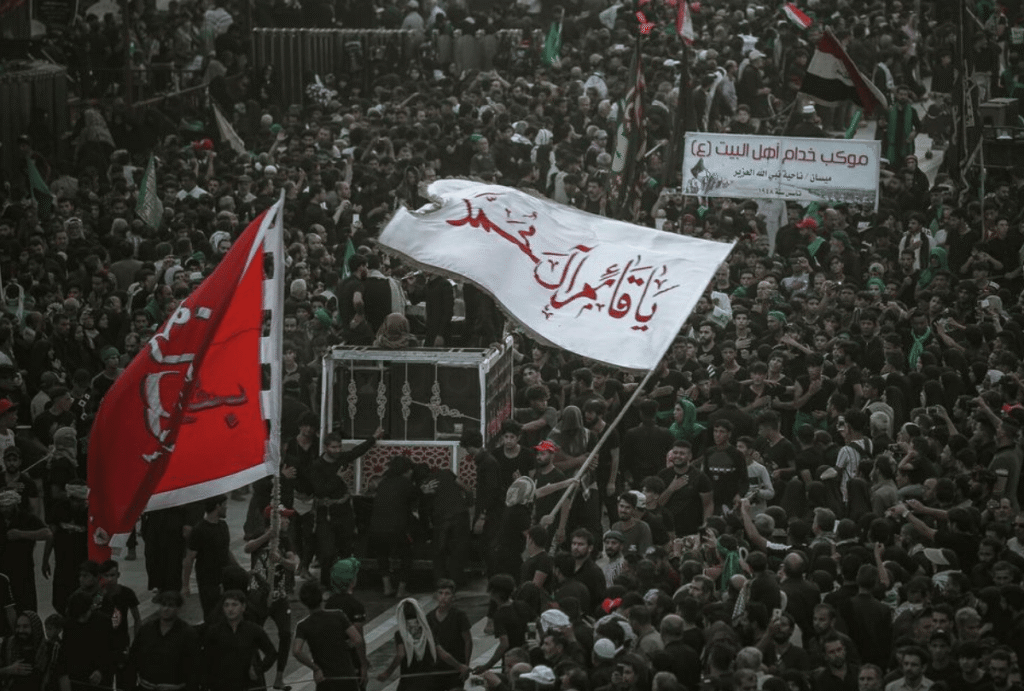
Every year, millions of people from across the world journey towards Karbala, Iraq, to commemorate Arbaeen and honour the sacrifice of Imam Hussain (as). What began as an act of remembrance following the tragedy of Karbala has become a global gathering centred on faith, service, unity, and the pursuit of justice.
Arbaeen marks the 40th day after the martyrdom of Imam Hussain (as) in 680 CE (61 AH). For Muslims, especially followers of the Ahlulbayt (as), it is one of the most significant moments in the Islamic calendar. It represents a continued commitment to the values Imam Hussain (as) stood for: standing against oppression, protecting truth, and sacrificing for what is right.
The Quran reminds believers of the importance of honouring sacred symbols:
For millions of visitors who travel to Karbala every year, Arbaeen is not simply a journey to a place. It is an expression of devotion, a renewal of commitment, and a reminder that the message of Imam Hussain (as) continues to inspire people around the world.
Here are five facts that highlight the significance of the world’s largest annual gathering.
1. Arbaeen is the world’s largest annual peaceful gathering
One of the most remarkable aspects of Arbaeen is its incredible scale. Each year, millions of pilgrims gather in Iraq, with attendance figures in some years exceeding 20 million people. This makes Arbaeen widely recognised as the world’s largest annual peaceful religious gathering.
Despite the immense number of people involved, Arbaeen remains defined by spirituality, generosity, and community. Pilgrims travel from countries across the globe, walking together towards Karbala with a shared purpose: to remember Imam Hussain’s (as) sacrifice and renew their connection to his values.
Unlike many large gatherings, Arbaeen is not centred around entertainment or celebration. Instead, it is a journey of reflection and remembrance. Every step taken towards Karbala represents love for Imam Hussain (as) and a commitment to the principles he sacrificed his life to defend.
2. The Arbaeen Walk covers around 80 kilometres from Najaf to Karbala
While pilgrims arrive in Karbala through different routes, the most famous part of Arbaeen is the walk from Najaf to Karbala. This journey covers approximately 80 kilometres and has become one of the most recognisable acts of devotion associated with Arbaeen.
Along the route, pilgrims follow numbered poles that help guide their journey. The path is marked by 1,452 poles, with each pole placed around 50 metres apart. These markers allow visitors to track their progress and navigate one of the largest walking pilgrimages in the world.
For many pilgrims, the physical difficulty of the walk is part of its meaning. Walking for days under challenging conditions reflects sacrifice, patience, and dedication. It serves as a reminder of the hardships endured by the family of Imam Hussain (as) after the events of Karbala.
The journey is not measured only by distance. Each step carries spiritual significance, as pilgrims walk towards the shrine of Imam Hussain (as) with hearts filled with love and loyalty.
3. Thousands of mowkebs provide hospitality along the journey
A defining feature of Arbaeen is the culture of service that surrounds it. Along the roads leading to Karbala, thousands of volunteer-run mowkebs are established to support pilgrims throughout their journey.
These stations provide essential services including food, water, accommodation, rest areas, showers, sanitation facilities, and medical assistance. Many are funded and operated by ordinary people who dedicate their time, resources, and efforts to serving the guests of Imam Hussain (as).
The generosity shown through mowkebs reflects the spirit of sacrifice and hospitality that lies at the heart of Arbaeen. People from different backgrounds come together to serve pilgrims, often offering whatever they can, whether that is a meal, a place to rest, or a helping hand.
This tradition of service has become one of the most powerful symbols of Arbaeen. It demonstrates that the gathering is not only about reaching Karbala, but also about embodying the values Imam Hussain (as) represented.
4. Arbaeen is a sign of faith recognised by the Ahlulbayt (as)
The significance of Arbaeen is deeply rooted within Islamic tradition. It is not simply a modern gathering, but an act of devotion that has been emphasised through the teachings of the Ahlulbayt (as).
This narration highlights the unique importance of visiting Imam Hussain (as) on Arbaeen and places it among the distinguishing signs of belief. For millions of believers, travelling to Karbala is a way to renew their relationship with Imam Hussain (as) and reaffirm their commitment to his mission.
The journey of Arbaeen continues because the message of Karbala remains relevant. The call for justice, dignity, and resistance against oppression transcends time and geography, inspiring generations of believers across the world.
5. Arbaeen brings together people from around the world
Although Arbaeen holds deep significance within Shia Islam, its message has reached far beyond one community. People from different countries, cultures, and backgrounds participate in the gathering, creating a unique atmosphere of unity and shared purpose.
Pilgrims from across the world travel to Karbala, carrying with them their own experiences, traditions, and reasons for joining the journey. For many, Arbaeen represents a stand for universal values such as justice, compassion, dignity, and opposition to oppression.
The gathering also reflects the enduring impact of Imam Hussain’s (as) sacrifice. His decision to stand against injustice at Karbala continues to inspire people who believe in defending truth and supporting the vulnerable.
The global legacy of Arbaeen: A journey of faith, service and unity
Arbaeen is more than a pilgrimage. It is a global expression of devotion that brings together millions of people in remembrance of Imam Hussain (as) and his companions.
The gathering demonstrates how the message of Karbala continues to influence communities nearly 1,400 years later. Through the Arbaeen Walk, acts of service, and collective remembrance, pilgrims keep alive the values of courage, sacrifice, and standing for justice.
The recognition of Arbaeen hospitality as an element of UNESCO’s Intangible Cultural Heritage in 2019 further highlights the importance of the tradition of service surrounding the pilgrimage. The countless volunteers who provide food, shelter, and support demonstrate a culture of generosity that has become central to the Arbaeen experience.
For those who take part, every aspect of the journey carries meaning. Walking towards Karbala, serving pilgrims, or supporting those who make the journey possible are all expressions of love for Imam Hussain (as).
Continuing the message of Imam Hussain (as)
The legacy of Imam Hussain (as) has never been limited to one moment in history. The events of Karbala continue to remind humanity of the importance of truth, sacrifice, and standing against injustice.
Arbaeen allows millions to reconnect with this message every year. Through remembrance and service, pilgrims demonstrate that the values Imam Hussain (as) represented remain alive.
For those unable to travel to Karbala, supporting the people and communities who serve this extraordinary gathering provides another way to participate in its spirit. Acts of generosity and service help ensure that pilgrims can continue their journey with dignity and support.
Millions journey towards Imam Hussain (as). Let your giving walk beside them by supporting the people and communities serving this extraordinary movement.
Frequently asked questions
What is Arbaeen?
Arbaeen is the 40th day after the martyrdom of Imam Hussain (as) at the Battle of Karbala in 680 CE (61 AH). It is one of the most significant commemorations for followers of the Ahlulbayt (as), with millions travelling to Karbala each year to perform Ziyarat Arbaeen.
Why is Arbaeen considered the world’s largest annual gathering?
Arbaeen is considered the world’s largest annual peaceful gathering because millions of people travel to Karbala every year to commemorate Imam Hussain (as). In some years, reported attendance has exceeded 20 million pilgrims.
How long is the Arbaeen Walk?
The most famous Arbaeen route is the walk from Najaf to Karbala, which covers approximately 80 kilometres. The route includes 1,452 numbered poles that help pilgrims measure their progress along the journey.
What are mowkebs during Arbaeen?
Mowkebs are volunteer-run hospitality stations established along the Arbaeen routes. They provide pilgrims with essential services such as food, water, accommodation, medical support, and places to rest.
Do only Shia Muslims participate in Arbaeen?
While Arbaeen holds particular importance for Shia Muslims, people from different communities and backgrounds participate in the gathering. Many are inspired by the universal values associated with Imam Hussain’s (as) sacrifice, including justice, dignity, and resistance against oppression.
Why is Arbaeen important today?
Arbaeen remains important today because it keeps alive the message of Imam Hussain (as). The gathering represents a commitment to truth, compassion, service, and standing against injustice, values that continue to resonate with people worldwide.
More from blog
Bridging the Digital Divide Through Education
Discover how education and technology can help bridge the digital divide and create equal learning opportunities. Support children with the tools for…
Can Sadaqah Be More Than Money?
Sadaqah isn't only about giving money. Discover how your time, kindness, knowledge and actions can become acts of charity in Islam with…
The Future Starts with Education
Invest in education and help vulnerable children build skills, confidence and opportunity. Support The Zahra Trust’s Back to School appeal today.