
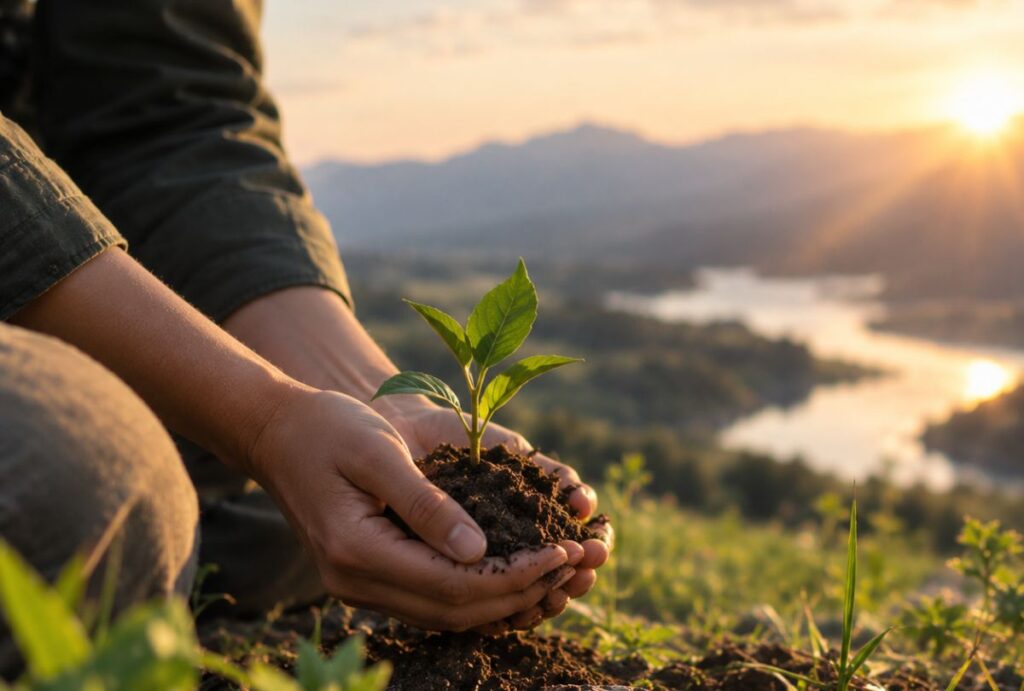
The Earth is a gift from Allah (swt), filled with the water, food, plants, animals and natural resources that sustain life. As Muslims, our relationship with the environment is not simply about protecting nature for its own sake. It is connected to our responsibility towards Allah (swt), towards one another and towards future generations.
Islam teaches us that we have been entrusted with the world around us. This responsibility calls us to avoid waste, prevent harm, protect natural resources and maintain the cleanliness of the places we share.
This is especially important when we think about the communities where children live and learn. A healthy community needs clean surroundings, safe schools, access to resources and people who understand that caring for creation is part of their responsibility.
“Calamities (and disasters) appear in the land and the sea because of what the people’s hands have wrought as polytheism (and sins).” (30:41)
This verse encourages reflection on the consequences of human actions. Our choices matter, whether they involve the resources we consume, the waste we produce or the environments we create for others.
Islamic Stewardship and Our Trust
One of the important concepts in Islamic environmental responsibility is khilafah, often understood as stewardship or being entrusted with responsibility on Earth. Human beings have a role to play in caring for Allah’s (swt) creation rather than treating it as something to use without limits.
Closely connected to this is amanah, the idea of a trust. The world around us is something we have been entrusted with, and that trust carries responsibilities.
This means environmental care can be understood as an expression of faith. Conserving water, reducing unnecessary waste, planting trees and keeping shared spaces clean can all reflect an awareness that our actions have consequences.
“(We said,) ‘Eat and drink from the provision of Allah (swt) and do not act wickedly on the earth, creating chaos.’” (2:60)
The message is relevant to everyday life. We can appreciate the provision Allah (swt) has given us while recognising that using resources responsibly is part of living with gratitude.
Cleanliness, Health and Shared Spaces
Environmental responsibility begins with the places closest to us. Our homes, schools, mosques, streets and community spaces all contribute to our wellbeing.
Clean surroundings can support physical health, dignity and a stronger sense of community. For children in particular, a clean and safe school can make an important difference to their ability to concentrate, participate and feel comfortable while learning.
The Prophet (saww) is reported to have said, “Try to be clean as much as you are able to. Verily, Allah (swt) has based the foundation of Islam on cleanliness; hence, never can a person enter Paradise but the clean ones.” (Kanz al-Ummal, n. 26002)
Keeping a classroom clean, disposing of rubbish properly and caring for shared facilities may seem like small actions, but together they help create healthier environments.
Clean schools are therefore about more than appearance. They can contribute to an environment where children can learn with dignity and where teachers can do their work in a safe and supportive setting.
Caring for Water and Allah’s (swt) Creation
Water is one of the clearest reminders of our dependence on Allah’s (swt) creation. It sustains people, animals and plants, and its availability can determine whether a community is healthy and able to thrive.
The Quran describes the life-giving nature of water:
“Allah (swt) sent down the water from the cloud and thus revived the earth after its death; in this, surely there is a sign for the people who listen.” (16:65)
This perspective encourages us to treat water as a precious provision rather than an unlimited resource. At home, in schools and in places of worship, simple steps such as fixing leaks, using water carefully and avoiding unnecessary waste can put Islamic principles into practice.
Environmental responsibility also extends beyond water. Planting and protecting trees, caring for animals and preserving natural spaces are ways of recognising the value of Allah’s (swt) creation.
Prophet Muhammad (saww) is reported to have said, “Every single Muslim that cultivates or plants anything of which humans, animals or birds may eat from is counted as charity towards them on his behalf.” (Kanz al-Ummal, n.9051)
Planting something that benefits others therefore carries a beautiful sense of ongoing generosity. A tree can provide shade, food and shelter long after the person who planted it has moved on.
Building Healthy Communities Through Responsibility
Environmental issues rarely affect only one person. Pollution, waste, poor sanitation and the misuse of natural resources can affect entire communities, often placing the greatest burden on people who are already vulnerable.
That is why caring for the Earth is also connected to justice.
Healthy communities depend on people recognising their responsibilities towards one another. This can include taking part in local clean-up activities, reducing food waste, conserving water, planting trees and encouraging children to understand why environmental care matters.
Schools can play an especially important role. Children can learn practical habits such as recycling, reducing waste, caring for school grounds and using resources responsibly. These lessons can then extend beyond the classroom into homes and communities.
Environmental education can therefore become part of a wider culture of amanah, encouraging young people to see themselves as responsible members of their communities.
Making Environmental Responsibility Part of Everyday Life
Taking care of the Earth does not always require dramatic changes. Often, it begins with consistent everyday choices.
Families can reduce unnecessary consumption and avoid wasting food and water. Schools can introduce recycling initiatives, tree-planting projects and lessons about Islamic environmental ethics. Mosques and community centres can consider practical measures such as water-saving facilities, waste reduction and responsible use of energy.
Communities can also encourage children to take part. A school gardening project, a litter-picking activity or a lesson about conserving water can turn an abstract idea into something children can experience themselves.
Rasoolallah (saww) is reported to have said,
“There are two things most people are tested with: health and idleness.” (al-Kafi, v.8, p.152, n.136)
Using our time and health constructively can include contributing to the wellbeing of our surroundings. When people come together to improve their neighbourhoods, schools and shared spaces, small individual actions can become meaningful community efforts.
Creating Schools Where Children Can Thrive
A responsibility towards the environment naturally connects with a responsibility towards people.
For children, the environment in which they learn can shape their experience of education. A classroom is more than four walls. It is where a child learns to read, develops confidence, asks questions and begins to imagine what their future might look like.
Yet many vulnerable communities face classrooms without the basic resources needed to create a supportive learning environment. Safe spaces, learning materials, classroom resources and technology can all help children and teachers make the most of their education.
Supporting these environments is another way of strengthening a community. When a classroom has what children need to learn, the benefit can reach every pupil who enters it.
Environmental responsibility reminds us to care for the spaces we share. Islamic stewardship reminds us that this care is a trust. Together, these principles encourage us to build environments where people, particularly children, have the opportunity to thrive.
Our Responsibility to Future Generations
Caring for the Earth is ultimately about thinking beyond ourselves.
The decisions we make today can influence the quality of life available to those who come after us. Wasting fewer resources, protecting natural environments and creating healthy schools and communities are practical ways of thinking about that responsibility.
Islamic teachings provide a powerful framework for this. Khilafah calls us towards responsible stewardship. Amanah reminds us that what we have been given is a trust. Cleanliness encourages us to care for our shared spaces, while moderation teaches us not to consume without consideration.
When these values become part of everyday life, environmental responsibility becomes more than a modern concern. It becomes an opportunity to live our faith through practical action.
Caring for the Earth, Strengthening Communities
Our responsibility to take care of the Earth is inseparable from our responsibility to care for one another.
A clean environment can support healthier communities. A clean, safe classroom can give children a better place to learn. Planting a tree can provide benefits for people, animals and future generations. Conserving water can help us respect a precious provision from Allah (swt).
These actions may appear small individually, but together they can help create stronger, healthier and more supportive communities.
A classroom can be more than four walls. It can be where confidence begins, where questions are encouraged and where dreams start to feel possible. By supporting classrooms with safe spaces, learning materials, classroom resources and technology, we can help create environments where children are able to thrive.
Sponsor a classroom and help create a place where futures can begin. Support the classroom that supports every child.
Frequently Asked Questions
What does Islam teach about caring for the Earth?
Islam teaches that human beings have a responsibility to care for Allah’s (swt) creation. Concepts such as khilafah, or stewardship, and amanah, or trust, remind us that natural resources should be used responsibly. Avoiding waste, preventing harm and protecting the environment are practical ways of fulfilling this responsibility.
Why is environmental responsibility important in Islam?
Environmental responsibility is important because our actions affect both the world around us and the people who share it. The Quran warns against causing corruption on Earth, while Islamic teachings encourage cleanliness, moderation and respect for creation. Caring for the environment can therefore be an expression of faith and responsibility towards others.
How can schools help promote environmental responsibility?
Schools can help children develop responsible habits through recycling initiatives, tree-planting activities, water conservation and lessons about caring for creation. Keeping classrooms and school grounds clean also helps provide children with safe, healthy spaces where they can focus on learning.
What is the connection between clean schools and healthy communities?
Schools are an important part of a community, so creating clean and supportive learning environments can contribute to wider community wellbeing. When children have safe spaces, appropriate learning materials and the resources they need, they are better placed to learn, develop confidence and contribute positively to their communities.
How can I help care for the environment in my community?
There are many simple ways to contribute, including reducing waste, conserving water, planting trees, keeping shared spaces clean and taking part in local environmental initiatives. Supporting projects that provide children with safe and well-equipped classrooms is another way to strengthen the wellbeing of a community.
More from blog
Bridging the Digital Divide Through Education
Discover how education and technology can help bridge the digital divide and create equal learning opportunities. Support children with the tools for…
Can Sadaqah Be More Than Money?
Sadaqah isn't only about giving money. Discover how your time, kindness, knowledge and actions can become acts of charity in Islam with…
The Future Starts with Education
Invest in education and help vulnerable children build skills, confidence and opportunity. Support The Zahra Trust’s Back to School appeal today.